Cole Young Mariners Prospect Breakout 2026 Spring Training Futures Impact
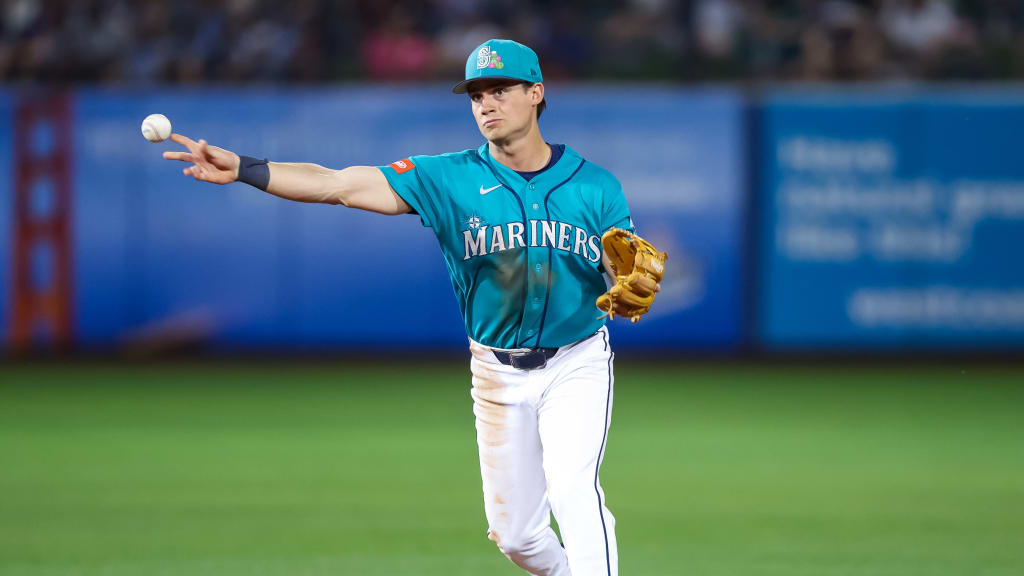
Cole Young has been the breakout story of Seattle's 2026 spring training camp.
Something has changed with Cole Young. The 22-year-old second baseman launched a 478-foot home run on Friday night against the Cleveland Guardians, the longest Statcast-measured blast of the entire 2026 spring training, and it was just one piece of a three-hit performance that included another homer and a two-run double. Young isn't just turning heads anymore. He's rewriting his own scouting profile in real time, and if you're paying attention to what the underlying data says, this breakout has serious implications for Seattle's futures value heading into the regular season.
The Raw Numbers That Have Everyone Buzzing
Young is slashing .294/.368/.725 through 51 Cactus League at-bats with a team-high six home runs and four doubles. His six homers rank third among all MLB spring training players, trailing only Shea Langeliers and Matt McLain, who each have seven. For a player who hit .211 with just four home runs across 77 major league appearances last season, that kind of power output is impossible to ignore.
But the stat that really matters here isn't the batting average or the homer count. It's the exit velocity. Young's average exit velocity has skyrocketed from 87.4 mph during the 2025 regular season to 95.9 mph this spring. That's an 8.5 mph gain, which is absolutely enormous in baseball terms. To put that in perspective, an exit velocity jump of even 3-4 mph between seasons typically flags a player as a breakout candidate in predictive models.
What AI Prediction Models Look For in Prospect Breakouts
If you're newer to the analytics side of baseball betting, here's the key concept: AI prediction models don't just look at surface-level stats like batting average and home run totals. They dig into the process behind the results. Exit velocity, hard-hit rate, and barrel percentage are considered "process metrics" because they measure the quality of a hitter's contact, not just the outcomes.
Young's hard-hit rate has jumped from 31.4% in 2025 to 56.7% this spring. His barrel rate has nearly doubled, moving from 5.9% to 10.0% of batted ball events. When a 22-year-old former first-round pick posts those kinds of gains while also maintaining discipline at the plate (he's carrying a .368 on-base percentage), AI models read that as a genuine mechanical or physical improvement, not a random hot streak.
There's a big difference between a player who gets lucky for three weeks and a player whose underlying contact quality has fundamentally changed. The data strongly suggests Young is the latter, and that's exactly the kind of signal that futures bettors should be watching for.
The Physical Transformation
The numbers didn't come out of nowhere. The physical changes are visible. Mariners President of Baseball Operations Jerry Dipoto said Young "looks incredibly athletic right now" and described him as looking "kind of chiseled." The organization credits Julio Rodriguez for challenging Young in the clubhouse after Seattle's heartbreaking Game 7 ALCS loss last October, motivating the young infielder to attack his offseason conditioning with a new level of intensity.
Jim Bowden noted that Young is "looking bigger, stronger and more confident" than the previous year. GM Justin Hollander highlighted how Young has "found his rhythm at the plate, making hard contact to all fields while also controlling the strike zone." This isn't a player who added a few pounds and got lucky. Young overhauled his physique, fitness, and overall preparation, and the results are showing up in every measurable dimension of his game, from his bat speed to his defensive range moving to his right.
What This Means for Mariners 2026 Futures
Here's where it gets interesting for bettors. The Mariners' win total is set at 89.5 at BetMGM, and projection models are forecasting roughly 94 wins for Seattle, which would be the best mark in the American League. The Mariners are coming off a 90-win 2025 season, their first AL West title since 2001, and a Game 7 ALCS appearance. Expectations are sky-high, and the roster is built to compete right now.
When a team's projection models already forecast 94 wins, the question for futures bettors becomes: where is the upside that the market hasn't priced in yet? That's where Young comes in. Most projection systems built their Mariners forecasts based on Young's underwhelming .211/.269/.338 rookie slash line and his .607 OPS. If Young actually produces at something closer to his spring training level, or even somewhere between his rookie numbers and his current output, that's a material upgrade at second base that the market isn't fully accounting for.
BetMGM recently reported taking a $300,000 wager at +100 for the Mariners to win the AL West. That's sharp money, and it tells you that at least one major bettor views Seattle as undervalued. A legitimate breakout from Young, converting that second base spot from a below-average offensive contributor to an above-average one, would further validate that position.
The Cautionary Note: Spring Training Data Limitations
Here's the honest truth, and it's something that separates informed bettors from casual ones: spring training stats come with enormous caveats. Sample sizes are tiny. Pitchers aren't throwing their full arsenals. Lineups are shuffled constantly. Conditions in Arizona and Florida don't replicate the regular season. AI models weight spring training data very lightly compared to minor league track records and regular season performance.
That said, spring training "process" data matters more than spring training "results" data. A .300 batting average in March is fairly meaningless. But an 8.5 mph exit velocity jump? A hard-hit rate that nearly doubles? Those are indicators of a physical change that persists beyond spring. Models treat exit velocity gains as one of the most "sticky" spring metrics, meaning they tend to carry over into the regular season at a higher rate than batting average or home run totals.
Young also showed flashes of this power during his 2025 season. He hit a 456-foot home run in July that was the longest by any Mariners player that year. The raw power was always in there. What's different now is the consistency of the hard contact, which suggests the mechanical and physical improvements are real.
How This Fits Into Seattle's Loaded Lineup
The Mariners don't need Cole Young to carry the offense. They already have Julio Rodriguez, Cal Raleigh, and a deep supporting cast that powered them to 90 wins last year. What they need is for the second base spot to stop being a drag on the lineup. Young's .607 OPS as a rookie was well below the league average for second basemen, and upgrading that position internally would be far more cost-effective than any trade deadline acquisition.
If Young can produce even a .750 OPS over a full season, that's a roughly 1.5 to 2 WAR swing at a position that was a near-zero contributor last year. In a division where the Astros, Rangers, and Angels are all capable of making noise, that kind of internal improvement could be the difference between a wild card berth and another division crown.
Hollander put it bluntly: "I think he's showing us that he's ready to play in the big leagues and ready to just take the job and run with it." For AI models that factor in organizational confidence and playing time security, that kind of public endorsement from the GM carries weight. Young is locked in as the everyday second baseman on Opening Day, and the leash should be long given his draft pedigree and the organization's investment in his development.
The Bottom Line for Futures Bettors
Cole Young's spring breakout is one of the most data-rich prospect stories in baseball right now. The exit velocity surge, the hard-hit rate explosion, the physical transformation, and the organizational endorsement all point in the same direction. If even half of these gains translate to the regular season, the Mariners' lineup gets meaningfully better at a position that was a weakness in 2025.
For bettors evaluating Mariners futures, the over on 89.5 wins already looks attractive given how projection models see this roster. Young's breakout is a potential bonus that the market hasn't fully priced in. Keep an eye on his first two weeks of regular season data to see if the exit velocity holds, and consider the Mariners' AL West odds if the early-season returns confirm what we're watching this spring.