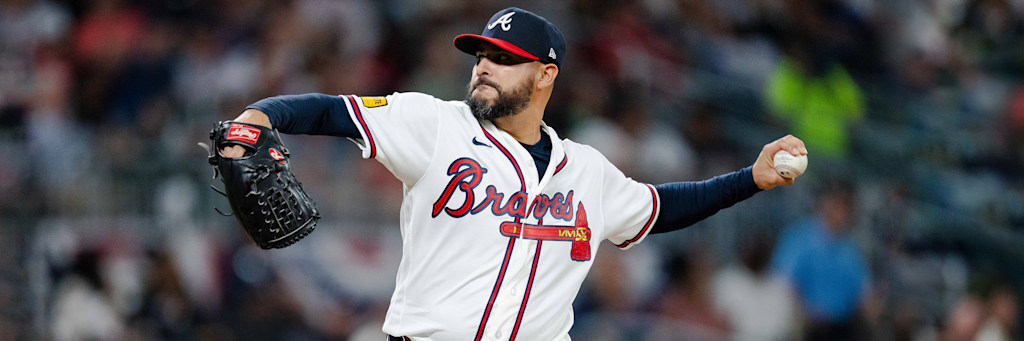
If you are newer to baseball betting, here is a spot that teaches you something every time it shows up. The best team in the National League is on the road, favored to win, and the price has been shaved down close to a coin flip. The official model pick that night is the Atlanta Braves moneyline at -110 against the Chicago White Sox at Rate Field, a 1-unit play, and the reason it makes the AI card is the gap between how good Atlanta is and how cheaply you can buy them. That gap is the whole idea behind value, and a road favorite is one of the cleanest places to see it.
So let us use this exact game to walk through what a moneyline is, why a price near -110 on a club this strong is a green light, and how the model turns a matchup into a number you can actually bet.
What A Moneyline Actually Is
The moneyline is the simplest bet in the sport. You are picking which team wins the game, nothing more. The final score does not matter, the margin does not matter, only the win. that night you are betting the Braves to beat the White Sox at -110, which means you risk 110 dollars to win 100, or scaled to units, you risk 1.1 units to win 1. There is no run line, no total, no innings window to track. Atlanta wins, the ticket cashes. Atlanta loses, it does not. That clean yes-or-no structure is exactly why the moneyline is the first bet type a new bettor should master before touching anything fancier.
Why A Road Favorite At -110 Is The Value Part
Here is the piece newer bettors miss. The number you pay is a price, and a price can be too low. The Braves come into that night at 45-23, the best record in the National League, against a 36-31 White Sox club that is solid but a clear tier below. On a neutral field a team this much better would normally be priced steeper, often in the -130 to -150 range. The reason this one sits closer to -110 is the road tax. Books and the public both shade money toward the home side, so visiting favorites routinely get discounted even when they are the better team. That discount is the value. You are getting the stronger club at a softer price simply because they are wearing the gray uniforms that night.
Think of it like a sale tag. The Braves are the same 45-23 team whether they play in Atlanta or Chicago, but that night the market is selling them at a markdown because of where the game is. A value bettor buys the better team when the location knocks a few cents off the price, and that is precisely what -110 on a contender represents.
Verified Game Setup
| Team | Record | Probable starter |
|---|---|---|
| Atlanta Braves (road favorite) | 45-23 | Martin Perez, 4-3, 3.02 ERA, 1.06 WHIP, 47 K in 56.2 IP |
| Chicago White Sox (home dog) | 36-31 | Anthony Kay, 5-1, 4.40 ERA, 1.45 WHIP, 46 K in 61.1 IP |
The model isolates one question: which team is more likely to win this single game. Atlanta's record, its starter, and the price all point the same direction.
How The AI Model Reads The Pitching Matchup
The clearest input is the arm on each side. Martin Perez has been steady and quietly excellent for Atlanta, carrying a 3.02 ERA across 56.2 innings with a 1.06 WHIP, which means he allows roughly one baserunner per inning. That control number is the one to circle. A low WHIP tells you a pitcher keeps the bases clean, and clean bases mean the opponent rarely strings together the multi-hit innings that flip games. Chicago counters with Anthony Kay, who owns a respectable 5-1 record but a 4.40 ERA and a much higher 1.45 WHIP. He puts more men on, and against a Braves lineup hitting .256 with a .751 OPS and 92 home runs, extra traffic against Kay is the kind of thing that turns into runs.
The model does not need Perez to throw a shutout. It needs the better starter to be the better starter, the deeper lineup to be the deeper lineup, and the result to land on the favorite more often than the -110 price implies. When you stack a 1.06-WHIP arm and the league's best record against a 1.45-WHIP opponent and a sub-.500 home side, the win probability sits north of where the market has it.
The Break-Even Math Every Beginner Should Know
This is the number that makes value concrete. At -110 you need the Braves to win about 52.4 percent of the time just to break even over the long run. That figure comes from the price itself: risk 110 to win 100, and over many bets you have to cash slightly more than half to stay even. So the only question that matters is simple. Do you believe the 45-23 Braves, with Perez on the mound, beat the 36-31 White Sox more than 52.4 percent of the time? The model lands their true win probability comfortably above that bar, in the high 50s. Anything above 52.4 percent at this price is positive expected value, which is the entire reason to make the bet. You are not betting because the Braves are good. You are betting because they are good and cheap at the same time.
How This Connects To Smarter Betting And Futures
For newer bettors building toward bigger ideas, this single game is a building block. A moneyline is the foundation of a parlay, where you chain multiple winners together for a larger payout with the catch that every leg must hit. It is also the seed of a futures bet, since betting the Braves to win their division or reach the World Series is just a season-long version of picking them to win one game. A club at 45-23 is exactly the kind of team that anchors both a daily moneyline and a long-term futures ticket. Master spotting value on a single road favorite like this one, and the path to reading futures prices gets a lot shorter.
The Honest Counterpoint
No favorite is a lock, and a beginner should know what beats this ticket. Baseball is the most random of the major sports on any single night, and the team with the worse record wins outright all the time. The White Sox are 36-31, not a pushover, and Anthony Kay is 5-1 for a reason, capable of a clean start that keeps Atlanta's bats quiet. Home field is a real edge, the crowd is on Chicago's side, and a one-run game can tip either way on a single swing or a bullpen hiccup. Perez can also have an off night, since even a low-WHIP arm gives back runs when the command slips. That live variance is exactly why the model stakes this at a measured 1 unit rather than loading up.
How The Price Sets The Stake
At -110 you risk a touch more than you win, so there is no plus-money cushion here. The edge has to come entirely from the matchup, and the model judges it real but modest, a strong road favorite getting a location discount rather than a blowout mismatch. That is why this is a 1-unit play. The value is in buying a contender below their true price, and the disciplined response to a real-but-modest edge is a real-but-modest stake. Copying that sizing logic is one of the most useful habits a new bettor can build.
What Beats It
A White Sox upset beats this ticket, and it does not take much. A sharp Anthony Kay start, an early Perez exit that hands the game to the bullpen, or one crooked inning from Chicago's bats at home can flip a one-run game. The under-talented team wins outright on plenty of nights in baseball, which is the whole reason the road favorite is priced near a coin flip in the first place. The play leans on Atlanta being the better team across nine innings, which is the most likely outcome but never a guaranteed one.
Final Verdict
The official model pick is the Atlanta Braves moneyline at -110 for 1 unit at Rate Field. The edge is the cleanest kind for a newer bettor to learn: the best record in the National League, a 1.06-WHIP starter in Martin Perez, and a price shaved down to near a coin flip simply because Atlanta is the road team. Above the 52.4 percent break-even line that -110 demands, this is positive expected value. Along the way you now know the core idea behind every smart bet, which is paying less than something is worth. For more beginner-friendly breakdowns, see our moneyline guide on the Yankees AI card, our walkthrough of a home-favorite moneyline on the Brewers, and the full model pick archive for how these favorites have run.