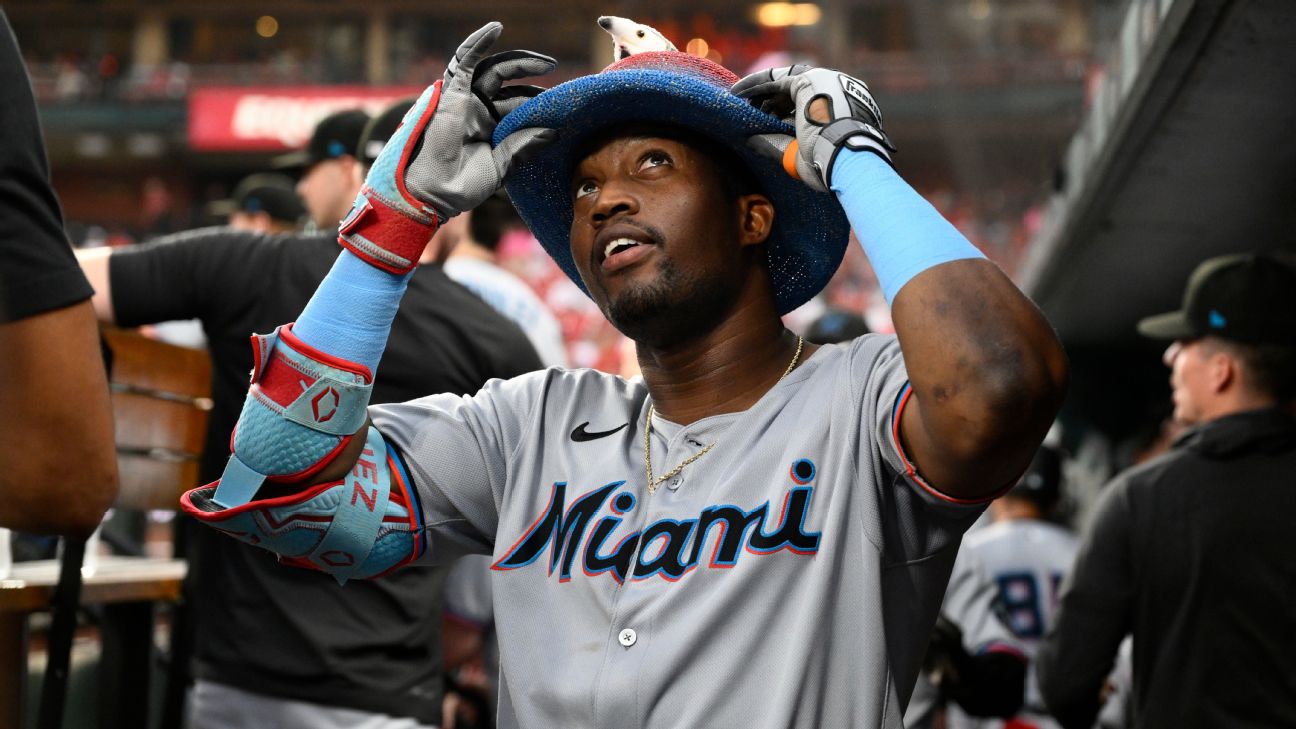
If you play fantasy baseball, you're going to want to pay attention to this one. On February 13, the Toronto Blue Jays traded outfielder Joey Loperfido back to the Houston Astros in exchange for outfielder Jesus Sanchez. On the surface, it might look like a minor swap that won't affect your draft at all. But depending on your league format, this trade could create some real value in the later rounds of your draft if you know where to look. Let's break it all down in plain English.
Who Is Joey Loperfido, and Why Should Fantasy Players Care?
Joey Loperfido is a 26-year-old outfielder who was originally drafted by the Astros in the seventh round of the 2021 draft. He bounced between Houston and Toronto over the last couple of years and now has 122 career MLB games under his belt. Here's the part that matters for fantasy: in 2025 with the Blue Jays, Loperfido hit .333 with 4 home runs, 14 RBI, and an .879 OPS in 41 games. That's a really impressive line. For context, if you maintained an .879 OPS over a full season, you'd be one of the better hitters in baseball. Now, the important caveat is that 41 games is a small sample. He could regress. But the improvement from his 2024 numbers (.197 average, just 2 home runs in 43 games) to his 2025 numbers is exactly the kind of breakout trajectory that fantasy managers should be targeting in the late rounds.
The fact that he's going back to Houston, the team that drafted and developed him, is a plus for his fantasy outlook. He already knows the organization, the coaching staff, and the ballpark. Minute Maid Park has historically been a good hitter's park, and if Loperfido can secure a semi-regular role in Houston's outfield, he could be a sneaky source of production that most of your league mates won't be drafting.
Who Is Jesus Sanchez, and What Does He Bring to Toronto?
Jesus Sanchez is a lefty-swinging outfielder with real power potential who has had an up-and-down career so far. If you played fantasy in 2023 or early 2024, you might remember him as a promising young bat with the Miami Marlins. Across roughly 1,300 plate appearances with Miami from 2023 onward, Sanchez hit .253/.319/.428. That's a solid line for a fantasy outfielder, especially one who was often available on the waiver wire. The power has always been the calling card with Sanchez.
Here's where it gets complicated. Houston acquired Sanchez from Miami at the 2024 trade deadline, sending Ryan Gusto and two minor leaguers the other way. But Sanchez struggled mightily in Houston. In 2025, he hit just .199/.269/.342 with 4 home runs and 12 RBI in 48 games (160 plate appearances). That's a 71 wRC+, which means he was producing at about 29 percent below the league average. His career average sits at .239, so his true talent level is probably somewhere between his Miami highs and his Houston lows.
Fantasy Baseball Draft Strategy: Where to Target These Players
Let's get to the practical stuff. In standard 12-team mixed leagues, neither Loperfido nor Sanchez is likely to be drafted in the first 15 rounds. That's exactly why they're interesting. These are the kinds of late-round fliers that can win you a league if they hit.
For Loperfido, the fantasy upside case is straightforward. He just hit .333 with an .879 OPS. If he wins a starting job or even a platoon role in Houston, he could provide solid batting average and OPS contributions at a position you're not investing significant draft capital in. He's the kind of player you grab in the last few rounds of your draft or add off waivers in April once spring training playing time becomes clear. The risk is that the Astros don't give him consistent at-bats. Monitor his spring training performance closely.
For Sanchez in Toronto, the appeal is the power upside. He showed 15-to-20 home run potential during his Marlins tenure, and if Rogers Centre's dimensions suit his left-handed swing, he could tap back into that pop. The career .239 average means he's going to hurt your batting average, which makes him more valuable in points leagues and OBP leagues than in standard categories formats. He's a deep-league stash or a waiver wire pickup if he starts hitting in April and May.
Keeper and Dynasty League Impact
If you're in a keeper or dynasty league, this trade is more interesting than it looks. Loperfido is the player to prioritize here. He's young, he showed massive improvement from 2024 to 2025, and he's now back in the organization that developed him. The .879 OPS in 41 games is a small sample, but in dynasty formats, you're buying the upside, not the floor. If he's available on your league's waiver wire or going undrafted in your rookie/minor league draft, he's worth a roster spot as a speculative hold. Sanchez in dynasty is trickier. He's a bit older with a longer track record, but that track record includes significant struggles in Houston. He's a hold-and-see in dynasty, not someone you're actively seeking out. If he's already on your roster, the move to Toronto doesn't change his value dramatically in either direction. It's a new environment, which could help, but the track record is mixed enough that you shouldn't overreact.
Which Team Won This Trade for Fantasy Purposes?
From a pure fantasy baseball perspective, this trade is pretty close to a wash, but if you forced me to pick a winner, I'd give a slight edge to the Astros. They're getting a player with a more recent track record of success (the .333/.879 OPS 2025 line), while the Blue Jays are betting on Sanchez bouncing back from a rough 2025. Both bets could pay off, and that's what makes this trade fun to analyze. In fantasy, the takeaway is simple: add Loperfido to your draft watch list as a late-round sleeper with upside, monitor Sanchez as a potential waiver wire add if he starts hitting in Toronto, and check spring training box scores in March to see which player is earning consistent playing time. The information you gather over the next six weeks will tell you everything you need to know about which side of this trade to invest in for your fantasy roster.