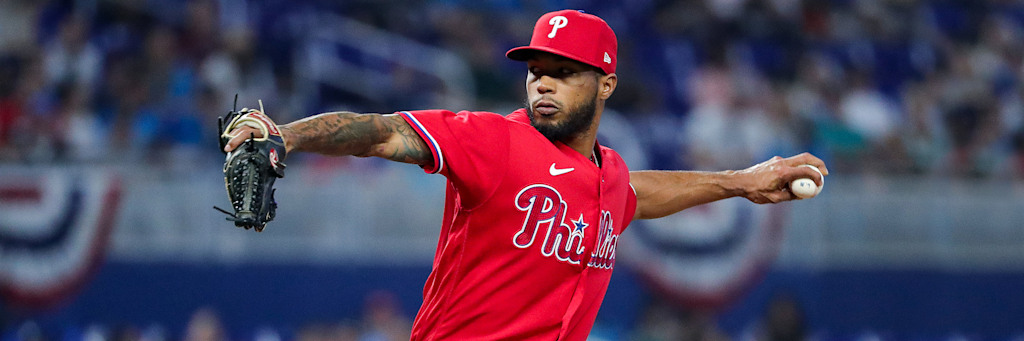
Some unders you have to argue yourself into. This one the numbers hand you. Saturday night sends a cold New York lineup into Philadelphia to face Cristopher Sanchez, who has spent the whole first half making major-league hitters look overmatched, and the model's read is the New York Mets team total under 3.5 runs at -150 for 3 units. This is the rare team total where both halves of the equation lean the same way: the bats going quiet and the arm staying loud. Let me walk you through what the bet actually is, why it earns a full 3 units rather than a cautious lean, and the one thing that could blow it up.
First the vocabulary, because team totals quietly confuse more new bettors than any other market. A team total is not about who wins, and it is not the combined score of the game. It is a bet on how many runs one team scores by itself. The Mets team total under 3.5 cashes if New York scores three runs or fewer, full stop. Philadelphia can win 2-1 or lose 9-3; the only number that settles this ticket is the Mets' own run column when the last out is recorded.
The Matchup: A Slumping Mets Lineup Lands In Philadelphia
New York comes in at 34-41 and, more to the point, in a clear offensive rut. Over their last 10 games the Mets are averaging just 4.1 runs, and they sit dead last in the NL East, 13.5 games behind the division-leading Braves. The Phillies, meanwhile, are a 40-35 club sitting second in the division and open as a solid home favorite. That favorite price is your first tell. The market already expects Philadelphia to control this game, and it is doing so largely because of who is on the mound for them.
Here is why the rut matters for a team total specifically. A lineup that is pressing and chasing tends to make the easy outs even easier against a strike-thrower, because hitters in a slump expand the zone and put weak contact in play early in counts. A team total under is a bet that a cold offense stays cold for one more night, and the Mets are walking into the worst possible matchup to break out of it.
Why Cristopher Sanchez Is The Engine Of This Under
Now the loud half. When you back a team total under, you are really betting on the other team's pitcher, and Sanchez has been one of the best run-suppressors in baseball this year. His line reads 8-3 with a 1.82 ERA, a 1.09 WHIP, and 116 strikeouts across 99 innings. Read the WHIP again. A WHIP barely above one baserunner per inning means he is not handing out the free passes and cheap hits that rallies are built on, because the easiest way for a slumping lineup to score is to be given baserunners, and Sanchez simply does not give them away.
The shape underneath the numbers is what makes him so tough on a cold club. Sanchez lives off a heavy sinker that he pours into the strike zone to generate ground balls, then puts hitters away with a changeup that falls off the table. A pitcher who throws strikes and misses bats at better than ten strikeouts per nine innings removes both of a struggling offense's escape hatches at once: he will not walk you into a rally, and he will not let you barrel him for the big hit. That is exactly the profile a team total under wants.
Why Strikeouts And Walks Decide A Team Total
This is the beginner lesson worth keeping. A team total under is a bet on run prevention, and the two cleanest tools a pitcher has are missing bats and avoiding walks. A strikeout is the only outcome in baseball that cannot become a run; a ground ball can be booted, a fly ball can carry, a bloop can fall, but a punchout ends the at-bat with the lumber on the shoulder. Sanchez is collecting strikeouts at better than ten per nine innings while keeping his WHIP near one, which strips a cold lineup of both ways to manufacture runs. New York would need to string together hard contact against an arm posting a 1.82 ERA, with almost no free baserunners to lean on. That is a tall order for a lineup averaging 4.1 runs over its last 10.
The Unit Math On A -150 Favorite
Let us put real numbers on the stake, because the math is where newer bettors gain the most. The Mets under 3.5 is priced at -150. A minus price means you risk more than you stand to win: at -150 you risk 1.5 units for every 1 unit of profit. So a 3-unit play, sized to win 3 units, means risking 4.5 units. If New York scores three runs or fewer, you collect 3 units. If the Mets score four or more, you lose the 4.5 risked.
| Detail | Value | What it means for a beginner |
|---|---|---|
| The bet | Mets team total under 3.5 | Wins if New York scores 3 runs or fewer |
| The price | -150 | Risk 1.5 to win 1; a clear favorite |
| The stake | 3 units | Risk 4.5 units to win 3 units |
| The engine | Cristopher Sanchez, 1.82 ERA / 1.09 WHIP | Strikeouts and few walks cap the Mets |
Why a full 3 units here? Because this is a clean, isolated read. On our June 19 Red Sox team total under behind Bryce Miller the model leaned on the same logic, a cold offense against an elite strikeout arm, and that is exactly the template here. Sanchez is healthy, deep into a dominant season rather than riding a hot streak, and facing a lineup that has gone quiet. Fewer variables means more conviction, and that is when the model sizes up.
Verified Pick Inputs
| Game | Records | Starters |
|---|---|---|
| Mets at Phillies (Citizens Bank Park) | NYM 34-41 / PHI 40-35 | Freddy Peralta (Mets) / Cristopher Sanchez (8-3, 1.82 ERA, 1.09 WHIP, 116 K in 99 IP) |
One note that does not change the bet but sharpens the picture: the Mets send out Freddy Peralta, a strikeout arm in his own right, which is part of why this projects as a low-scoring game overall. His presence does not touch a Mets team total, since that bet only tracks New York's bats, but a quality matchup on both sides is why the broader market expects a tight, run-starved night.
Why This Matters For Your Bankroll
The lesson that travels past that night is this: team totals let you bet the part of a game you actually have a read on. You do not need to predict who wins a Saturday-nighter between a first-division club and a last-place one. You only need to answer one cleaner question, which is whether a specific lineup, on this specific night, against this specific pitcher, can clear a specific number. When a slumping offense draws an elite strikeout arm and the line is set at a low 3.5, that question gets much easier than picking a side. For more of how the model isolates these spots, see that day's Dodgers run line breakdown and our Tigers team total under behind Hunter Brown.
The Honest Counterpoint
No play is free money, and this one has a real risk: the ballpark and the long ball. Citizens Bank Park is a hitter-friendly yard, and a cold lineup can still run into one swing. A solo home run or a quick two-run inning is exactly the kind of fluky event that can push a low team total over before the pitcher's dominance ever shows up in the box score. Cold lineups also sometimes wake up against an unfamiliar look, and the Mets have enough big-league bats to bunch a few hits together on any given night. The model still hammers the under because the underlying inputs are stacked: an elite strikeout pitcher, a lineup averaging 4.1 runs over its last 10 and buried in last place, and a low number New York must clear specifically against Sanchez. Strong is not the same as certain, but everything here points the same way, and that alignment is what earns the 3 units.
Final Verdict
The June 20 model pick is the New York Mets team total under 3.5 runs at -150 for 3 units at Citizens Bank Park. Strip it to the studs and the case is simple: a Mets offense in a clear rut, averaging 4.1 runs over its last 10 and sitting last in the NL East, walks into Philadelphia against a healthy Cristopher Sanchez who owns a 1.82 ERA, a 1.09 WHIP, and 116 strikeouts. Both starters can pitch, the Phillies are a clear home favorite, and the under number is low enough that New York has almost no margin. That is the kind of aligned, answerable spot the model was built to find. For the full record of how these team-total plays have landed, browse the daily picks archive.