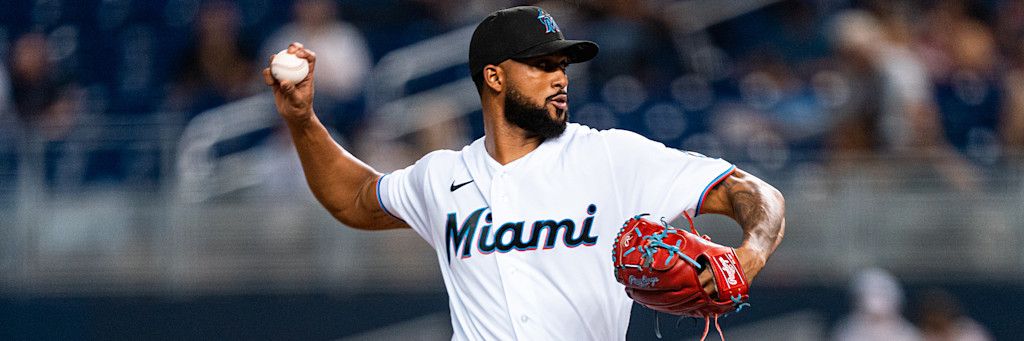
Here is the whole bet in one sentence: a team that averages 4.17 runs per game is being asked to clear 3.5 runs. That is the Daily MLB Picks model play for Monday, the Miami Marlins team total over 3.5 at -125 for 1.5 units against the Washington Nationals at Nationals Park. You are not picking a winner and you are not betting a side. You are betting that Miami scores four runs, something the Marlins have done at a better-than-coin-flip rate all season. Let me walk through why the number is on your side, and I will be honest about the one thing that can sink it.
- Pick: Miami Marlins team total OVER 3.5 runs
- Price / stake: -125, 1.5 units
- Cashes when: Miami scores 4 or more runs, win or lose
- The core number: Marlins average 4.17 R/G in 2026
- The risk: Cade Cavalli is missing bats (10.26 K/9 over his last month)
- What a team total over actually means
- Verified game setup and starters
- The number that anchors the bet: 4.17 runs a game
- The Cavalli paradox: strikeouts up, but so is the traffic
- Five innings of Cavalli, four innings of the bullpen
- The Nationals Park run environment
- How the model lands on the over
- Price and unit case
- What beats this pick
- Frequently asked questions
What A Team Total Over Actually Means
If you are new to this market, it is the friendliest bet on the board. A team total of 3.5 runs asks one question and only one: does Miami score 4 or more, or do the Marlins stay at 3 or fewer? The Nationals could win 8-1 or lose 5-4 and it would not matter to your ticket. The only thing being graded is Miami's own run column.
That is why sharp newer bettors gravitate to team totals. Instead of solving the entire game, you isolate one offense and ask a focused, answerable question about it. You can be dead wrong about who wins and still cash, because the bet lives entirely on what Miami's bats do. Narrower question, cleaner read.
Verified Game Setup
| Team | Record | Probable starter | 2026 line |
|---|---|---|---|
| Miami Marlins | 26-34 | Sandy Alcantara (RHP) | 3-4, 4.66 ERA, 1.33 WHIP, 52 K |
| Washington Nationals | 31-29 | Cade Cavalli (RHP) | 3-3, 3.62 ERA, 1.41 WHIP, 68 K |
First pitch is 6:45 PM ET at Nationals Park. The full-game total sits at 8.5 runs and Washington is a modest home favorite, which tells you the market expects a competitive, mid-range scoring game, not a blowout. One housekeeping note before we go further: Sandy Alcantara is Miami's starter, but for a Marlins team total his line is almost irrelevant. Alcantara's job is to limit Washington's runs. The arm that decides whether Miami scores four is the man in the other dugout, Cade Cavalli. So that is where the real work is.
The Number That Anchors The Bet: 4.17 Runs A Game
Start with the foundation. Through 60 games, Miami has scored 250 runs. That is 4.17 runs per game. The line you are being offered is 3.5. In plain terms, the Marlins' season-long scoring rate is already two-thirds of a run above the number, before you adjust for anything about tonight. When a team's baseline output sits above the line, the over is not a reach, it is the expectation, and the under is the bet asking for a below-average night.
This is not an empty, all-or-nothing lineup either. Miami gets on base at the top and has thump in the middle:
| Hitter | Slash line | OPS | Power |
|---|---|---|---|
| Xavier Edwards (2B) | .314 / .398 / .480 | .877 | 6 HR, table-setter |
| Otto Lopez (SS) | .326 / .356 / .457 | .813 | team-high 75 hits |
| Liam Hicks (C) | .268 / .344 / .468 | .812 | team-high 11 HR, 45 RBI |
Xavier Edwards is getting on base at a .398 clip, which means the engine of this offense is constantly putting a runner in front of the bats that can drive him in. Otto Lopez leads the team with 75 hits and is slashing .326, and Liam Hicks supplies the over-the-fence equity with a team-best 11 home runs and 45 RBIs. You do not need all three to go off. You need the top of the order to do its normal job of reaching base and one of the run-producers to cash a couple of them in. That is a four-run night, and it happens more often than not for a team at 4.17 per game.
The Cavalli Paradox: Strikeouts Up, But So Is The Traffic
Now the honest part, because a real handicap does not hide the other side. Cade Cavalli is pitching the best baseball of his career. He owns a tidy 3.62 ERA, he has punched out 68 hitters in 59.2 innings for a loud 10.26 K/9, and he has reached eight-plus strikeouts in four of his last six starts. If you only read the strikeout column, you would run from this over.
But look one column to the right. Cavalli's WHIP is 1.41. That is the tell. A pitcher striking out a batter per inning while still allowing 1.41 baserunners per inning is not cruising through clean frames, he is working in traffic. The strikeouts get him outs, but the hits and the 3.17 walks per nine keep putting Marlins on base, and runners on base are exactly the raw material a team-total over is built from. High strikeout, high WHIP is the single most over-friendly starter profile there is: the punchouts make the line look scary, while the traffic underneath quietly produces runs.
There is a corroborating team signal too. Washington is just 4-8 in Cavalli's twelve starts this season. A starter can rack up strikeouts and still hand his bullpen a tie or a deficit, and that 4-8 mark says opponents have been finding enough offense in his games to keep winning them. For a Miami team total, that is a friendlier backdrop than the shiny ERA suggests.
Five Innings Of Cavalli, Four Innings Of The Bullpen
Here is a number that quietly does a lot of work. Cavalli has thrown 59.2 innings across twelve starts. That is barely five innings per outing. Strikeout pitchers run up pitch counts, and a 10.26 K/9 with a 3.17 BB/9 means deep counts and early exits. Realistically, Miami sees Cavalli for two trips through the order and then spends the back third of the game against the Washington bullpen.
That matters enormously for a team total. Roughly four innings of this game project to be bullpen innings, and middle-relief and setup arms are where overs cash. A two-run game in the sixth becomes a four-run game in the eighth far more often than newer bettors expect, because the quality of pitching drops once the starter is gone. Betting Miami to reach four runs is partly a bet on Cavalli's pitch count getting him out of the game with innings to spare for the Marlins to add on.
The Nationals Park Run Environment
Nationals Park plays as a fair, roughly neutral big-league ballpark. There is no extreme run-suppressing dimension working against Miami, and an early-June evening in Washington is warm enough that the ball carries the way it is supposed to, not the dead-air conditions that strangle offense in early April. A neutral park simply lets a lineup's normal production show up on the scoreboard, and Miami's normal production is 4.17 runs a night.
How The Model Lands On The Over
The Daily MLB Picks model does not bet narratives, it bets distributions. It takes Miami's season scoring rate, adjusts the early innings for Cavalli's run profile (strikeouts down, but WHIP and walk rate up), adjusts the late innings for the Washington bullpen, and folds in a neutral park. When you spread all of that across nine innings, the Marlins' projected run column settles a hair above four. The line is 3.5. That gap, modest but real, is the entire edge.
Think of it as a probability, not a prophecy. The model is not promising Miami scores five. It is saying the most likely range for the Marlins' run total clears 3.5 often enough that -125 is a price worth paying. Betting the side where the projection and the market disagree, even by a fraction of a run, is the whole philosophy of a model pick.
Price And Unit Case
The tracked price is -125 and the stake is 1.5 units. At -125 you are laying juice, so be clear-eyed about it: the market also leans slightly toward this game having offense, and you are paying for that lean. The value is not a bargain number, it is the conviction that Miami specifically reaches four, supported by a 4.17 season rate and a high-WHIP opponent.
The 1.5-unit size is deliberate and disciplined. This is a confident lean, not a max-confidence hammer, precisely because Cavalli is genuinely good right now and can carry a clean start. You size the bet to the strength of the read, and a strikeout arm in form is a real enough counterweight to keep this at 1.5 units rather than three.
What Beats This Pick
The clean path to a loss is the dominant version of Cade Cavalli. If his strikeout surge is the real him and he carves Miami up for six or seven innings, the WHIP traffic never converts and a contact-reliant Marlins offense (.242 average, .373 slugging) can get stuck on two or three runs. His recent eight-strikeout starts are not a fluke, and a quiet night against a pitcher with swing-and-miss stuff is a believable under outcome. There is also no plus-money cushion at -125. That combination, a starter in form plus a non-elite slugging team, is exactly why this is a measured 1.5-unit play and not a heavier number.
Frequently Asked Questions
What is the Marlins team total over 3.5 pick on June 1, 2026?
The Daily MLB Picks model play is the Miami Marlins team total over 3.5 runs at -125 for 1.5 units against the Washington Nationals at Nationals Park. It cashes if Miami scores four or more runs, no matter who wins.
How many runs do the Marlins average in 2026?
Through 60 games Miami has scored 250 runs, an average of 4.17 per game, hitting .242 with a .318 on-base percentage and 46 home runs. That scoring rate already sits above the 3.5 line.
Is Cade Cavalli pitching well?
Yes, and that is the honest risk. Cavalli has a 3.62 ERA with 68 strikeouts in 59.2 innings, a 10.26 K/9, and eight-plus strikeouts in four of his last six starts. But his 1.41 WHIP shows he still allows heavy traffic, which is the run-creating raw material a team-total over needs.
Who are the Marlins hitters to watch?
Xavier Edwards (.314/.398/.480) sets the table, Otto Lopez leads the club with 75 hits at a .326 average, and catcher Liam Hicks supplies the power with a team-best 11 home runs and 45 RBIs.
What is the biggest risk to the over?
A dominant, efficient Cavalli start. If he commands his swing-and-miss stuff, a contact-dependent Miami offense can stall at two or three runs and the over misses, which is why the play is sized at a measured 1.5 units.
Final Verdict
The official play is Miami Marlins team total over 3.5 at -125 for 1.5 units. The math is simple and it favors you: a 4.17-runs-per-game offense, a high-WHIP starter who works in constant traffic and rarely sees the seventh inning, and four projected innings against a beatable Washington bullpen in a neutral park. The strikeouts make Cavalli look like a problem, but the baserunners he allows are exactly what this bet feeds on. Take Miami to score four.
Pick, odds, and unit size come from the BetLegend daily tracker, and the team total line was confirmed against the live sportsbook board. Records, runs per game, hitter slash lines, starter stat lines, and the full-game total were verified against ESPN, FanGraphs, and MLB.com for June 1, 2026.