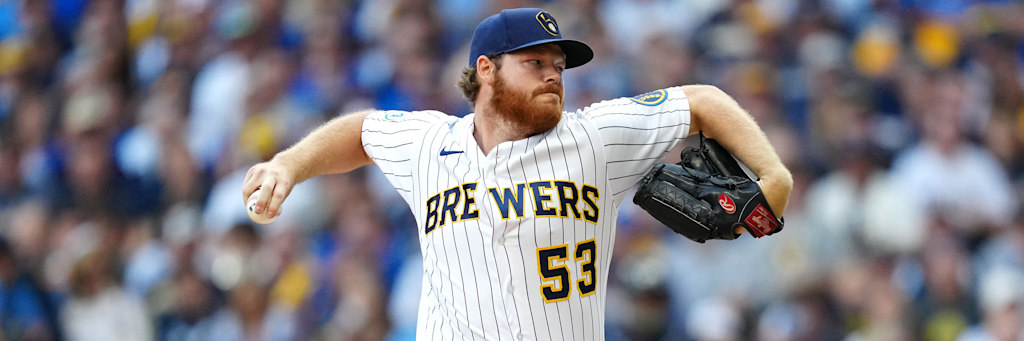
Most days the AI model spreads its picks across totals and team totals. that day it did something newer bettors should pay attention to: it leaned on three straight moneyline favorites, the Milwaukee Brewers, the New York Yankees and the Tampa Bay Rays. When a model stacks favorites like that, it is telling you the pitching and roster edges all point the same way on the same night. This is a beginner-friendly walkthrough of why, what a moneyline actually is, how the unit math works, and how that day's first-place clubs connect to the futures market you will eventually want to bet.
Start Here: What A Moneyline Is
A moneyline is the simplest bet in baseball. You are picking which team wins the game, nothing else. The final margin does not matter, so a one-run win and a ten-run win both cash the same ticket. The number next to the team is the price. A minus number means the team is favored, and the size of that number tells you how much you risk to win 100. The Brewers at -144 means you risk 144 to win 100. The Rays at -179 means you risk 179 to win 100, a steeper price because the model and the market both see them as the clearer favorite of the three.
Why The AI Backed The Brewers At -144
| Team | Probable starter | Record |
|---|---|---|
| Brewers | Brandon Woodruff (RHP, 2-1, 3.60 ERA) | 46-29 |
| Reds | Brady Singer (RHP, 3-6, 5.32 ERA) | 37-39 |
The Brewers carry the best record in the National League at 46-29 and they draw a soft assignment in Brady Singer, whose 5.32 ERA tells most of the story. Here is the deeper number the model circles for you: Singer's FIP, a stat that strips out luck and defense to estimate what a pitcher's ERA should be, sits at 6.15. When a pitcher's FIP is higher than his ERA, it is a warning sign that his results have been better than his actual performance, and the model expects that gap to close in the wrong direction for Cincinnati. A deep Brewers lineup in a hitter-friendly ballpark against a regressing arm is the kind of edge a -144 price does not fully capture.
One honest caveat the model flags: Brandon Woodruff is making his first start back from an injury, and his last outing in April ended after just over an inning. A pitcher returning from the injured list is usually on a pitch limit, which means the bullpen enters earlier than normal. That introduces some risk, and it is exactly why this play is sized at a moderate 1.5 units rather than a heavier stake. The bet is the roster gap and the Singer regression, not a complete-game gem from Woodruff.
Why The AI Backed The Yankees At -121
New York at -121 is the gentlest price on the card, and for a beginner that makes it the easiest to understand. New York is 46-30 and Detroit is 33-44, a 13-game gap in the standings. The price sits barely above even money because Gerrit Cole is still building back up after Tommy John surgery and is on an innings limit, which the market discounts. But a first-place roster against a club well under .500 should win more often than the 54.8 percent that -121 implies, even with the ace on a pitch count. The model rates the Yankees comfortably above that break-even line, which is the whole case.
Why The Rays At -179 Take The Steepest Price
Tampa Bay is the model's most confident favorite, and the Rays also carry the price that scares newer bettors the most. Tampa Bay is -179, which means you risk 179 to win 100, and they are hosting a Kansas City club that just scored 30 runs across its last three games. Your instinct will be to fade a hot offense at a steep price. The model does the opposite, and here is why. Drew Rasmussen brings a 2.59 ERA to the mound at Tropicana Field, one of the best run-suppressing ballparks in the sport. A short hot streak for the Royals bats means far less against an arm and a park built to limit runs. The model trusts the larger sample over three loud games, and it sizes the Rays at 1.5 units behind a clear pitching and park edge.
The Unit Math, Made Simple
Unit sizing is the habit that protects new bettors from themselves. A unit is just a fixed slice of your bankroll, the same dollar amount every time, so a good or bad night never blows up your account. On a minus-money favorite, the price tells you the risk. At -144, a one-unit win pays 0.69 units, and a loss costs the full unit. At -179, a one-unit win pays 0.56 units, and a loss costs the full unit. That is the trade-off with favorites: you win more often, but each win pays less than your stake. The model only lays these prices when it believes the team wins often enough to overcome that math, and all three favorites that day clear that bar.
The Four Unders On The Same Card
Moneylines are not the whole card. The model also likes four unders, and they make a clean second lesson in a different bet type. A total is the combined runs both teams score, and an under wins when the real total stays below the line. A team total is just one club's runs.
| Under play | Line | The simple reason |
|---|---|---|
| Braves/Padres | Under 7.5 (-120) | Petco Park strongly suppresses runs |
| Astros/Blue Jays | Under 7 (+105) | Two strikeout starters, Brown and a 110-strikeout arm |
| Guardians/White Sox | Under 8 (-120) | Gavin Williams misses bats at a 27.9 percent rate |
| Red Sox team total | Under 6.5 (-130) | A cold Boston lineup, even at Coors Field |
The Astros and Blue Jays under 7 is the most teachable of the four, because it pays plus money, +105, which means a one-unit win returns 1.05 units. You are getting better than even money on the side the model already likes, and that is unusual. Both starters in that game miss a ton of bats, and strikeouts are the surest way to keep runs off the board, because a strikeout can never turn into a hit or a run. When two such arms face off, low-scoring is the likeliest outcome, and the plus price is a gift. The Red Sox team total under 6.5 is the trickiest, because Boston plays at Coors Field, the most hitter-friendly park in baseball. The line is set high at 6.5 to account for the altitude, and the model still reads this cold Boston lineup as unlikely to clear it.
How that day's Favorites Connect To Futures
Here is the part that turns a daily card into a season-long education. A futures bet is a wager on a long-term outcome, like which team wins its division or the World Series. that day's moneyline favorites are also futures stories. The Brewers at 46-29 own the best record in the National League and a comfortable lead in the Central, which is exactly the profile that makes a division-winner future worth a look earlier rather than later. The Yankees at 46-30 sit atop a competitive American League East, a race where every head-to-head result nudges the futures price. Watching how a first-place club handles a soft opponent, like the Brewers against the Reds that night, is how you build the feel for whether a futures number is worth taking before the market tightens. For a deeper dive on that, see our 2026 win totals guide and the live World Series odds tracker.
What Beats This Card
Baseball favorites lose more often than newer bettors expect. The Brewers play depends on the Milwaukee bullpen holding up if Woodruff is pulled early on his pitch count. The Yankees play needs Gerrit Cole to give them a steady start before the bullpen takes over. The Rays play is the night the hot Royals bats carry into a rare Rasmussen clunker. On the unders, the biggest threat is any starter exiting early, which hands both lineups extra cracks at the bullpen and pushes a total over. The Red Sox team total is the most exposed, because one big inning at Coors can bust it. The model is favored on every leg, but favored is a probability, not a promise, which is why each play is sized rather than maxed out.
Final Verdict
The June 22 AI card leads with three moneyline favorites: the Brewers at -144, the Yankees at -121, and the Rays at -179, each for 1.5 units, backed by clear pitching and roster edges. The four unders, headlined by the plus-money Astros and Blue Jays under 7, add a second lesson in totals. For more beginner-friendly breakdowns, see the latest AI card and the full pick archive.