Look at the top of that day's card and notice something strange. The AI's heaviest play, three full units, is a game total in Seattle at -120. Its lightest play, a single unit, is a home favorite at -131. Most beginners assume the model bets big on the strongest favorites and small on everything else, and that day's board is the cleanest proof all season that it works the other way around. Confidence follows the quality of the evidence, never the size of the number next to a team's name. That one idea, plus a 2-9 pitcher the AI loves and a Coors Field team total that looks insane until you do the math, is your July 5 curriculum.
The 3-Unit Lead Pick: Blue Jays-Mariners Under 7.5
An under 7.5 wins if the two teams combine for seven runs or fewer. The AI made this its biggest bet of the day because everything measurable about the 5:00 PM ET game in Seattle points down. Toronto starts Trey Yesavage, who holds hitters to a .185 batting average, the best mark of any starter on that day's card, with a 3.34 ERA and only two earned runs allowed over his last two starts. Seattle starts Emerson Hancock, who has walked just 22 batters in 90.2 innings and carries a 1.05 WHIP, meaning barely one runner reaches base per inning. Behind those two arms sit two quiet offenses, Toronto scoring 4.00 runs a game and Seattle 4.09 while hitting .232 as a team.
Here is the lesson inside the bet. A moneyline needs one thing to happen: your team wins. Sounds simple, and that simplicity is exactly what makes it fragile, because one bad inning or one blown save decides it. A total like this one is supported by four independent facts at once, two strong pitchers and two weak offenses, and all four would have to be wrong for the bet to fail badly. When the AI finds four pieces of evidence pointing the same way, it bets three units, even though a total will never be as famous as a favorite.
The Lesson Pick: A 2-9 Pitcher The AI Trusts
Cleveland starter Tanner Bibee is 2-9 this season. A beginner sees that record and runs. The AI sees it and leans in, because win-loss records belong to teams, never to pitchers alone. Bibee's actual pitching has been excellent, a 1.11 WHIP and a .225 opponents average across 102.1 innings, with a 1.89 ERA over his last five starts. He is 2-9 because Cleveland scores just 3.96 runs a game for him, the weakest run support situation on that day's card. On June 24 he faced this exact White Sox lineup and threw six scoreless innings, and his record did not move.
So the AI splits the game in two. The Guardians moneyline at -131 gets one unit, small because Cleveland's quiet bats can waste a great start, exactly the way they have all year. The under 8 at -105 gets 1.5 units, because the same quiet Cleveland offense that makes the moneyline risky actively helps the under, and Chicago is starting Chris Murphy, a reliever stretching into just his second start of the season with only 19 innings thrown all year. When one fact hurts one bet and helps another in the same game, size them accordingly. That is portfolio thinking, and it is how professionals survive.
Red Sox Moneyline -153: When Both Records Are Lying
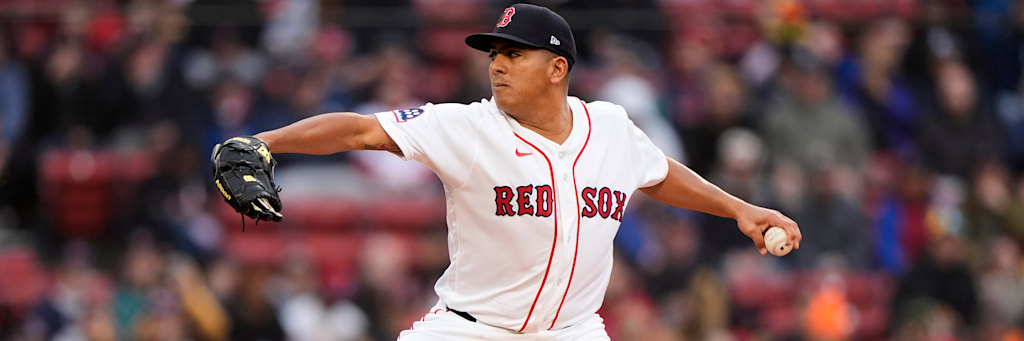
Boston is 39-48. The Angels are 36-54. Two losing teams at 9:30 PM ET does not look like a spot for a 2-unit favorite, until you look at the mound instead of the standings. Ranger Suarez has a 2.94 ERA with 92 strikeouts in 88.2 innings, and in his June 24 start he struck out nine at Coors Field, the hardest park in baseball to pitch in, while allowing one run. The Angels counter with Ryan Johnson, whose ERA is 7.40 and who has already served up six home runs in only 24.1 innings. Los Angeles hitters have also struck out 846 times, the most of any lineup playing in these six games, and a strikeout lineup against a command lefty is the worst possible pairing. The starting pitcher gap is 4.46 runs of ERA. Records measure the past three months of two whole rosters; that night only these nine innings and these two arms count.
The Coors Field Puzzle: Rockies Team Total Under 6.5
A team total bets on one team's runs only. that day the AI bets that Colorado scores six or fewer at home, and pays -140 to do it. At first glance this looks like the worst idea on the card. Coors Field inflates scoring, and the Giants are starting Tyler Mahle, who is 1-8 with a 5.67 ERA. Everything screams runs, which is exactly why the number is 6.5 instead of the 4.5 you see in normal parks. The market already moved the line for the altitude and for Mahle's struggles, and it moved it a long way.
Now do the beginner math. Colorado averages 4.84 runs per game this season, and that average already includes every high-scoring home date at altitude. For this bet to lose, the Rockies need seven runs or more in nine innings, roughly two full runs above their own established pace. Bad pitcher or no bad pitcher, seven-run games are the exception for a 36-54 team, and the AI is betting the ordinary outcome while the crowd bets the fireworks. The 2.5-unit stake and the steep -140 price reflect real risk, one hot afternoon in thin air beats this bet, but the number is fat enough to pay for it.
The Rest Of The Card: Houston And Arizona
The Rays-Astros under 9 at -115 earns 2.5 units in the 3:30 PM ET window at Daikin Park. The total of nine is the biggest number on that day's board, and Houston starter Peter Lambert is quietly holding opponents to a .209 average with a 3.51 ERA. Tampa Bay counters with Mason Englert, a swing man with 25 innings this season, which is the honest weak point, and the reason this is not the lead pick. You need the two teams to stay at eight combined runs or fewer, and two runs of cushion above the Seattle game's total buys a lot of forgiveness.
The Brewers moneyline at -116 earns 1.5 units at Chase Field, and it teaches one more pricing lesson. Milwaukee is 54-33, the best record of any team playing that day, and scores 5.13 runs a game, the most of any lineup on the card. A team like that at barely over even money looks like free value, so why only 1.5 units? Because Arizona starts Eduardo Rodriguez, 7-2 with a 2.21 ERA, one of the best arms the Brewers will see all month, while Milwaukee sends rookie Brandon Sproat and his 5.28 ERA. The AI still takes the better team at the friendly price, encouraged that Sproat has struck out 17 with two earned runs over his last two starts, but it sizes for the fact that the opposing pitcher is the single best player in the game that night.
| Pick | Price | Break-even win rate | Stake |
|---|---|---|---|
| Blue Jays/Mariners under 7.5 | -120 | 54.5% | 3u |
| Rockies team total under 6.5 | -140 | 58.3% | 2.5u |
| Rays/Astros under 9 | -115 | 53.5% | 2.5u |
| Red Sox moneyline | -153 | 60.5% | 2u |
| Brewers moneyline | -116 | 53.7% | 1.5u |
| White Sox/Guardians under 8 | -105 | 51.2% | 1.5u |
| Guardians moneyline | -131 | 56.7% | 1u |
Read the break-even column the way the AI does. A price of -120 means you must win 54.5 percent of identical bets over time to profit, while -153 demands 60.5 percent. Notice the biggest stake sits on the second-cheapest break-even, and the most expensive break-even on the card, the Red Sox at 60.5 percent, gets a medium stake backed by the day's biggest pitching mismatch. Stake, price and evidence always travel together.
What July 5 Says About Season-Long Bets
A single Saturday can teach you plenty about the futures board. Milwaukee at 54-33 is on a 100-win pace, and days like that day, where the market prices them at -116 against a 44-44 team, tell you the books still sell the Brewers cheaper than their record argues. Cleveland sits at 47-43 and keeps wasting starts like Bibee's, the classic profile of a team whose second half depends on one trade for a bat. If you want to act on either read, start with the 2026 win totals board and the current World Series odds tracker, and compare yesterday's thinking on the July 4 AI card. And if you use chatbots for your own handicapping homework, our AI prompting guide for sports betting shows how to make any model do this same break-even work before it hands you a pick.
Failure Modes, Play By Play
Every bet on this card has a specific way to die, so here they are in the open. The Seattle under dies on one bad inning from either starter, and Yesavage has had wild days, six walks against the Yankees on June 12. The Coors team total is the boldest bet on the card, because thin air can hand any lineup a seven-run day without warning. The Rays-Astros under leans on a 25-inning sample from Englert. The Red Sox and Brewers moneylines each face a real opposing weapon, a late window on the road and a 2.21 ERA lefty respectively. The Guardians pair can lose together if Bibee has his one bad inning. Starting lineups were not confirmed when this card was published, and a late scratch changes any of these bets. Never bet more than your plan allows on any single day, including this one.
Bottom Of The Ninth
Three units ride on the Blue Jays-Mariners under 7.5 at -120, backed by four independent pieces of evidence, and works down through the Rockies team total under 6.5, the Rays-Astros under 9, the Red Sox moneyline at -153 behind Ranger Suarez, the Brewers at -116, and the Guardians double built on a 2-9 pitcher whose record is the most misleading stat on the board. Take the three lessons with you: evidence sets the stake, records lie about pitchers, and a scary park is already priced into the number. The full history of these cards lives in the pick archive and the freshest boards are always on the latest page.