Most days a beginner starts with the moneyline, the simplest bet in the sport. that day the AI leads with something one step up that every new bettor should learn cold: the run line. The top two plays on the July 2 card are both run lines, and once you understand how one works, the rest of the slate, the moneyline, the first-inning play and the two team totals, snaps into place around them. Run the card from the top and you will walk away knowing what a run line is, why the model uses it instead of an expensive moneyline, and how a single day's picks quietly connect to the season-long futures market.
Start With The Key Bet: What Is A Run Line?
A moneyline just asks who wins. A run line adds a margin. When the model bets the Los Angeles Dodgers run line -1, it is wagering that the Dodgers win by more than one run, and the special part is what happens if they win by exactly one: that is a push, and you get your money back. It is the middle ground between the moneyline, where any win pays, and the standard -1.5 run line, where you get no push protection at all.
Why bother? Because the Dodgers are so good that the plain moneyline is expensive. Los Angeles is 56-31, the best record in baseball, and the moneyline against the 43-42 San Diego Padres sits at -198, meaning you risk almost two units to win one. That is a poor way to bet a favorite. Stepping down to the run line -1 at -133 lets you back the same team for far less, and you still get your stake back on a one-run win. Roki Sasaki takes the ball for Los Angeles at a 4.88 ERA but with real swing-and-miss, 72 strikeouts in 72 innings, against San Diego's Randy Vasquez and his 4.44 ERA. A deep Dodgers lineup tends to win comfortably rather than by a single run, which is exactly what a -1 run line wants. It is the 3-unit anchor of the card.
The Second Run Line: Mariners -1 Behind Bryce Miller
The card teaches the same lesson twice. The Seattle Mariners host the Los Angeles Angels and are -219 on the moneyline, an even steeper price. So the model again steps down to the run line -1 at -147. Seattle sends Bryce Miller, the best starter in any game on the slate at 3-2 with a tiny 1.97 ERA, against the Angels' Walbert Urena and his 3.14 ERA. Seattle has already won the first two games of this series at home, 6-2 and 8-3, exactly the multi-run wins a -1 run line is built to cash. The Angels are 36-51 and fading, and Seattle at 44-43 is the clearly stronger club here. It earns 2.5 units, a notch below the Dodgers because -147 is a slightly higher price to pay.
Read The Price: What Every Minus Number Costs
Before the rest of the card makes sense, learn to read the price tag. A minus number tells you how much you risk to win 100, and it hides the only figure that matters long term: your break-even rate, the share of bets you must win just to stay even. Take the price, divide it by the price plus 100, and there it is.
| Price | Risk to win $100 | Break-even win rate |
|---|---|---|
| -105 | $105 | 51.2% |
| -110 | $110 | 52.4% |
| -130 | $130 | 56.5% |
| -133 | $133 | 57.1% |
| -137 | $137 | 57.8% |
| -147 | $147 | 59.5% |
Read that table once and the card snaps into focus. The Padres team total under at -105 only needs to be right about half the time to break even. The Guardians moneyline at -110 is barely more. The Mariners run line at -147 is the most expensive play, so the model has to be right almost 60 percent of the time there just to stay level, which is why it is sized below the cheaper Dodgers run line even though both back a heavy favorite. Price is a tax on confidence, and the model pays it carefully.
The Coin-Flip Moneyline: Guardians -110
| Pick | Matchup | The read | Stake |
|---|---|---|---|
| Guardians ML -110 | White Sox at Guardians | Home side of a true pick, Cecconi vs Martin | 2 units |
Not every play lays a big favorite. The lone moneyline is a genuine coin flip: the Cleveland Guardians host the Chicago White Sox and are -110, with Chicago -106, a true pick where the two clubs sit one game apart at 45-42 and 45-40. Here is the honest beginner detail: the White Sox actually have the better starter, Davis Martin at 9-3 with a 3.00 ERA, against Cleveland's Slade Cecconi and his 4.18 ERA. The model backs the Guardians anyway because of home field and a near-even price, and it keeps the stake at 2 units rather than more precisely because the pitching leans the other way. When a bet is a coin flip, you size it like one.
A New Bet Type For Beginners: The NRFI
The card introduces a bet worth learning: the NRFI, short for No Runs First Inning. It is exactly what it sounds like, a wager that neither team scores in the opening frame. You are not betting on who wins or on the final total, only on whether the first inning stays scoreless. It is one of the easiest bets for a beginner to reason about, because you only have to look at the two starting pitchers and how they open games.
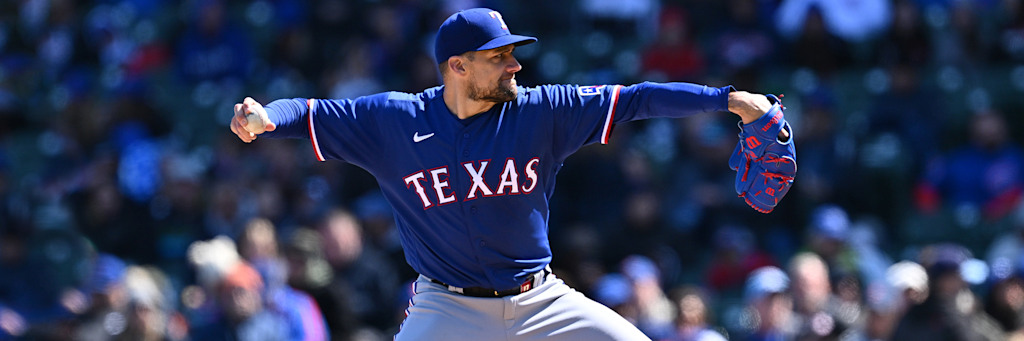
that night's NRFI is Tigers-Rangers at -137. Detroit sends left-hander Framber Valdez at a 4.05 ERA, and Texas counters with Nathan Eovaldi, an 8-7 arm with a 3.95 ERA who has thrown three straight starts of one earned run or fewer. Two settled starters who do not hand out early damage are the model's favorite NRFI profile, because most first innings are scoreless to begin with and steady arms make it likelier. It earns 2 units as a clean, low-variance play.
The Two Team Totals: Betting One Offense Only
The last two plays are team totals, which cover one club's runs and ignore the other. The Padres team total under 3.5 at -105 is a wager that San Diego alone scores three or fewer, and it pairs naturally with the Dodgers run line: if Los Angeles is winning by two or more, the Padres are usually the club being held down. The White Sox team total under 4.5 at -130 is the same idea in the Cleveland game, a bet that Chicago's road bat stays under five against Cecconi. Both are 1.5-unit leans, kept light because a team total can bust on a single three-run inning, and because the White Sox number carries a steeper price.
| Pick | The read | Stake |
|---|---|---|
| Padres TT Under 3.5 (-105) | San Diego held down while the Dodgers win by two | 1.5 units |
| White Sox TT Under 4.5 (-130) | A middling road bat capped by Cecconi | 1.5 units |
Where that day's Card Meets The Futures Market
Here is the part most daily breakdowns skip. A single-game ticket and a season-long futures bet are the same evidence at two different speeds. The model laying the Dodgers run line that night is backing a 56-31 club, and that record is the kind that keeps shortening a team's championship and division prices week after week. When you look at the World Series odds board, the smart move is to notice which clubs the model keeps trusting in daily spots before the futures market fully prices them in. The Dodgers laying a run line against a division rival is a daily data point that feeds directly into their long-term number.
The same runs through Seattle. The Mariners at 44-43 are hanging in the American League West race, and a home club the model keeps backing in run-prevention spots is exactly the kind of team to check on the 2026 win totals board before its price moves. For a beginner, the takeaway is that a daily card doubles as a futures scouting report: the teams the model keeps backing in single games, and the elite records it respects even when it only lays a margin, are the same names to watch on the long-term board.
How To Read The Whole Card At A Glance
Line the six plays up by stake and the model's thinking becomes a ladder. The 3-unit play, the Dodgers run line, is the strongest read relative to its price, the best team in baseball bought at a fair number instead of an expensive moneyline. The 2.5-unit Mariners run line is nearly as strong but costs a bit more. The 2-unit plays, the Guardians moneyline and the Tigers-Rangers NRFI, are solid, lower-variance leans. The two 1.5-unit team totals are real edges that each carry a steeper price or a thinner margin. You never have to agree with one pick to use this. Match the size of the bet to the strength of the read, every time, and you are thinking the way the model does.
What Beats This Card
Every play has a way to lose. The Dodgers and Mariners run lines both bust if the favorite wins by exactly one run or gets upset outright, the classic run-line sweat. The Guardians moneyline is a true coin flip against a 9-3 starter, so Davis Martin can carry Chicago. The NRFI dies on a single first-inning swing from either lineup before the pitchers settle. The two team totals fall to one three-run inning, the classic team-total bust. Lineups were not all confirmed at publication, so a late scratch can move the math on any total. Favored is a probability, not a promise, which is exactly why these six plays are spread from 1.5 to 3 units instead of stacked on any one.
Final Verdict
The July 2 AI card is a six-pick crash course built around the run line. The Dodgers run line -1 anchors it at 3 units and teaches you to back a heavy favorite without overpaying, joined by the Mariners run line -1 at 2.5 units. The Guardians moneyline -110 is the coin-flip play at 2 units, the Tigers-Rangers NRFI -137 introduces the first-inning bet at 2 units, and the Padres team total under 3.5 and White Sox team total under 4.5 round it out as single-offense unders. Learn the run line, learn the NRFI, read the break-even math behind every price, and watch which teams the model keeps trusting, and you will see how a single day's slip connects to the season-long futures board. For more beginner-friendly breakdowns, see yesterday's team total guide, the 2026 win totals page, the World Series odds board, and the full pick archive.