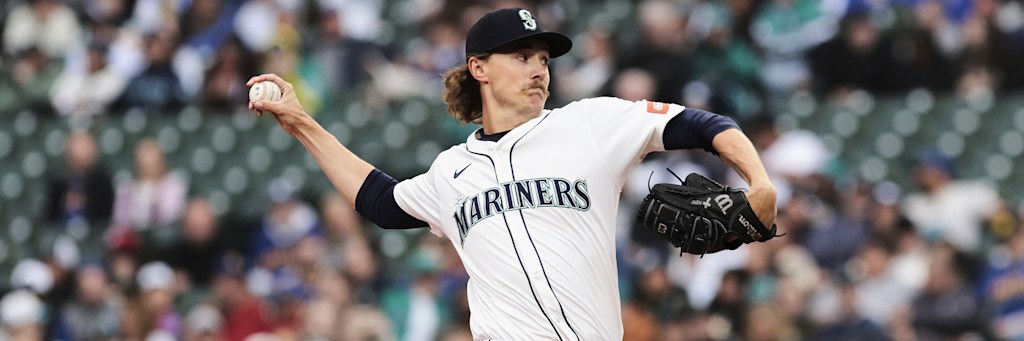
New bettors almost always ask the same question after they understand which side to take: how much should I actually put on it. That second question is where most beginners leak money, and it is the part our AI model answers most cleanly. So instead of just handing you four picks for Friday, this walkthrough shows how the model decides that the Seattle Mariners moneyline gets 3 units while the Giants moneyline gets only 1.5, using the real June 12 card as the classroom.
Here is the core idea in one sentence. A unit is just your standard bet size, usually one to two percent of a bankroll, and the model bets more units when the gap between its estimated win probability and the price's break-even is bigger. Same pick logic for every leg, different stake. That is unit sizing, and once it clicks, it changes how you read every card.
The Anchor Leg: Mariners Moneyline -142, 3 Units
The heaviest stake goes to the spot with the widest edge, and on Friday that is the Seattle Mariners moneyline at -142 at Washington. The reason is one pitcher. Bryce Miller has been the hottest arm on either staff, carrying a 1.33 ERA with a 0.78 WHIP and 29 strikeouts across his last four starts and 27 innings. For a beginner, WHIP just means walks plus hits per inning, so 0.78 means Miller is allowing fewer than one baserunner an inning, which is elite. Washington counters with Zack Littell, who sits at a 4.76 ERA and a 1.31 WHIP, a clear step down. When the better pitcher is also the hotter one, the model's win-probability estimate clears the -142 break-even of about 58.7 percent by enough to justify the top stake of 3 units.
The Second Leg: Angels Team Total Under 3.5, 2 Units
A team total is a bet on how many runs one specific team scores, ignoring the other side entirely. The Angels team total under 3.5 at -125 is a bet that the Angels score three or fewer runs, and it earns 2 units because two inputs line up. First, the Angels own the weakest offense on the board at a .233 average and a .701 OPS. Second, they face Shane McClanahan, a 2.85-ERA arm whose changeup eats up free-swinging lineups exactly like this one. A weak offense plus a strong opposing starter is the textbook recipe for an under, so the model sizes it just below the anchor at 2 units.
The Plus-Money Leg: Nationals Team Total Under 3.5, 1.5 Units
| Leg | Line | Units | Why this stake |
|---|---|---|---|
| Mariners ML at Washington | -142 | 3.0 | Widest edge, Miller 0.78 WHIP |
| Angels team total under 3.5 | -125 | 2.0 | Weakest offense vs McClanahan |
| Nationals team total under 3.5 | +113 | 1.5 | Plus money, same Miller suppression |
| Giants ML vs Cubs | -114 | 1.5 | Park edge, smaller gap |
Notice the Nationals team total under 3.5 is priced at +113, which is plus money. For a beginner, plus money means you win more than you risk: a 1-unit bet at +113 returns 1.13 units on a win. The model likes this leg because it is the same Bryce Miller run-suppression idea as the Mariners moneyline, just expressed on Washington's offense instead of the win. It gets 1.5 units rather than more because team totals carry more swing than a moneyline, but the plus-money price makes the math friendly, which is a great spot for newer bettors to see why price matters as much as the pick.
The Lightest Leg: Giants Moneyline -114, 1.5 Units
The Giants moneyline at -114 against the Cubs is the smallest edge on the card, so it gets the smallest stake. This one is not really about a dominant pitcher, it is about the ballpark. Oracle Park in San Francisco is one of the toughest places in baseball to score, with a deep right-center field and cool, heavy evening air that knocks down fly balls. That environment helps the home team in a close game. Landen Roupp brings a solid strikeout profile with 77 punchouts in 69.2 innings, while the Cubs starter Javier Assad has thrown only 32.1 innings this season, a small sample. The honest catch is that the Giants are 28-41 and the worse team by record, which is exactly why the model keeps this to 1.5 units instead of treating it like the anchor.
Verified Card Inputs
| Game | Records | Starters |
|---|---|---|
| Mariners at Nationals | SEA 36-34 / WSH 35-34 | Bryce Miller (1.33 ERA, 0.78 WHIP) / Zack Littell (4.76 ERA) |
| Rays at Angels | TB 40-25 / LAA 27-42 | Shane McClanahan (2.85 ERA, 1.10 WHIP) / Sam Aldegheri (2.25 ERA) |
| Cubs at Giants | CHC 35-34 / SF 28-41 | Javier Assad (4.73 ERA) / Landen Roupp (4.00 ERA, 77 K) |
Why This Matters For Your Bankroll
The lesson hiding inside this card is the one that separates beginners who last from beginners who go broke. If you bet every pick the same flat amount, your night is decided by your worst leg as much as your best one. By sizing up on the Mariners and down on the Giants, the model puts the most money where it has the most confidence and the least where it has the least, which is how an edge actually compounds over a season instead of getting erased by variance. You do not need an AI to do this. You just need to ask, before every bet, whether this is a 3-unit conviction or a 1.5-unit lean, and bet accordingly.
The Honest Counterpoint
Sizing does not make any single pick a winner, and baseball is the most unpredictable sport to bet on a given night. The Mariners can lose if Littell throws a gem or Seattle's bats go quiet, and a -142 favorite has no plus-money cushion to soften it. Either under can be wiped out by one three-run inning, because team totals are the kind of bet where most nights stay low and a few explode. The Giants lean leans on a ballpark and a thin sample, the two least certain things on the board. The model is favored on each leg, but favored never means guaranteed, and a calibrated card expects to lose a real share of bets it correctly priced to win. That is exactly why the stakes are measured and not maxed.
Final Verdict
The June 12 model card is the Seattle Mariners moneyline at -142 for 3 units, the Angels team total under 3.5 at -125 for 2 units, the Nationals team total under 3.5 at +113 for 1.5 units, and the Giants moneyline at -114 for 1.5 units. The sizing is the lesson: bigger edge, bigger stake. For more beginner-friendly model breakdowns, see our guide to the Braves road favorite value spot, our walkthrough on reading an AI moneyline card, and the full daily picks archive for how these model cards have performed.