If you opened the model's Sunday card and felt confused that almost every pick said the word under, here is the one-sentence reason: when great pitchers outnumber great offenses on a slate, runs get harder to come by, and the smart bet is on fewer of them. Six of the model's nine plays that day are unders, and that is not the AI being timid. It is the AI reading a board stacked with aces and following the math to where the value lives. This walkthrough is for newer bettors who want to understand why, not just what.
Let me define the key term first, because the whole card hinges on it. A team total is a bet on how many runs one specific team scores, ignoring the other side completely. The Brewers team total under 3.5 is simply a bet that Milwaukee scores three runs or fewer. You are not predicting who wins. You are predicting one offense against one pitcher, which is a narrower and often easier question than picking a side, and that is exactly why an AI loves team totals on a pitching-heavy day.
What An Ace Start Does To A Team Total
Here is the mental model. A good offense scores a lot because it strings together hits and walks before the third out. A dominant pitcher breaks that chain by missing bats, so fewer hitters reach base and the rally never starts. When the model sees an elite arm facing an average lineup, it shifts its projected runs for that lineup downward, sometimes by a full run or more, and that shift is what turns a team total under into a value bet.
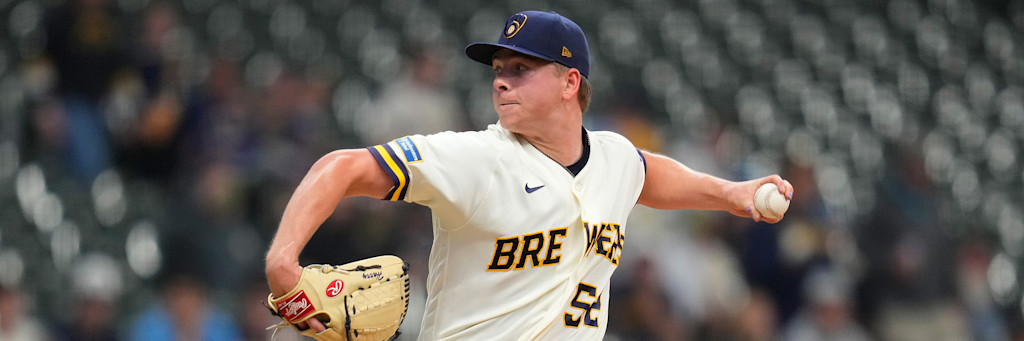
The clearest example on this card is the Brewers team total under 3.5 at -150. Milwaukee actually has a strong offense, scoring 5.38 runs a game, but they draw Cristopher Sanchez, who owns a 1.54 ERA with 113 strikeouts across 93.1 innings, the best run-prevention line in baseball this season. A great offense against the best arm in the league is exactly the kind of clash where the AI trusts the pitcher and bets the bats to go quiet. The model puts 2 units here because the matchup is that lopsided.
Why Six Picks Went Under that day
| Under pick | Line | The ace doing the work |
|---|---|---|
| Marlins team total under 3.5 | -140 | Paul Skenes (2.84 ERA, 0.93 WHIP) |
| Brewers team total under 3.5 | -150 | Cristopher Sanchez (1.54 ERA, 113 K) |
| Cubs team total under 3.5 | -110 | Logan Webb at Oracle Park |
| Phillies-Brewers full game under 6.5 | -110 | Sanchez vs Kyle Harrison |
| Marlins-Pirates full game under 7.5 | -120 | Skenes vs Max Meyer |
| Rockies team total under 6.5 | -130 | Colorado's road bats |
Look down that list and you will see the same pattern repeat: a quality starter against a lineup that is either cold or simply outmatched. Paul Skenes brings a 0.93 WHIP to PNC Park, which for a beginner means he allows fewer than one baserunner per inning, the single best predictor that a team will not score much. The Cubs under 3.5 leans on Logan Webb pitching at Oracle Park in San Francisco, one of the hardest places in baseball to hit a home run because of the deep right-center field and cool evening air. When the model sees enough of these spots on one slate, it does not force a contrarian over just for variety. It bets the unders and sizes them by how strong each matchup is.
The One Side The AI Backed: Mariners Moneyline
Not every pick on a pitching day is an under, and the lone side bet is worth understanding. The Seattle Mariners moneyline at -129 is the model's pick to win their game outright at Washington, and it gets 2 units. A moneyline, for newer bettors, is the simplest bet there is: you are just picking who wins, no runs involved. The model backs Seattle because Emerson Hancock has been excellent at a 2.74 ERA with a 0.95 WHIP, and a low-WHIP starter gives even a modest offense like Seattle's, which scores 4.31 runs a game, enough margin to win a tight, low-scoring game. The -129 price means you risk 1.29 units to win 1, which the model considers fair given the pitching edge.
How This Connects To Reading Futures
Here is a bonus lesson for beginners thinking about season-long bets. The same run-prevention idea that drives that day's unders is what quietly powers a team's futures odds. Milwaukee sits at 42-26 and Atlanta at a board-best 46-24, and a big reason contenders climb the standings is run prevention, not just slugging. When you watch a Sanchez or a Skenes shut a lineup down that day, you are seeing the exact skill that makes a pitching staff a smart futures play to reach October. New bettors who learn to value run prevention on a single team total are training the same instinct they will use when they bet a division or a pennant. The skill scales from one inning to one season.
How The Model Sizes The Card
Stake follows conviction, and conviction follows the matchup. The Brewers under 3.5 and the Cubs under 3.5 carry the heaviest team-total weight because Sanchez and the Oracle Park environment are the cleanest reads on the board. The Marlins under behind Skenes and the two full-game unders are strong supporting plays. The Mariners moneyline is the measured 2-unit side, and the Rockies under 6.5 is a 2-unit lean that respects the day's one high total of 14. If you take one habit from this card, let it be this: do not bet every pick the same amount, bet more where the matchup is more lopsided.
The Honest Counterpoint
Unders feel safe until one swing wrecks them, and that is the risk a beginner has to respect. Team totals are what statisticians call right-skewed, which is a fancy way of saying most nights stay low but a few explode, and a single three-run inning can carry an under all by itself. If any of these aces gets pulled early with a blister or a high pitch count, the bullpen comes in and the projection the model built around the starter disappears. The Rockies under 6.5 is the shakiest of the group because 6.5 is a generous ceiling and road bats can still ambush a soft start. The Mariners moneyline can lose if Hancock has an off day, because a -129 favorite gives you no plus-money cushion. The model is favored on each, but favored never means guaranteed.
Final Verdict
The June 14 model card is a pitching-day card, anchored by the Brewers team total under 3.5 at -150 behind Cristopher Sanchez and the Cubs team total under 3.5 at -110 at Oracle Park, supported by the Marlins under behind Paul Skenes and the full-game unders, with the Seattle Mariners moneyline at -129 for 2 units as the lone side. The lesson for newer bettors is that great pitching is a bettable signal, not just a highlight. For more beginner-friendly model breakdowns, see our guide to the Rays team total under against Jose Soriano, our walkthrough on the Braves road favorite value spot, and the full daily picks archive for how these model cards have performed.