Most days our AI card leans on an under or a team total, the quiet bets that newer readers learn to love. Thursday is different. The biggest stake on the June 18 board is a straight-up pick to win a game, the New York Yankees moneyline at -161 for 3 units at home against the Chicago White Sox. That price has a minus sign and a number high enough to make a beginner flinch, and that flinch is exactly what this guide is here to unpack. We will walk through what a -161 favorite actually costs, why the model is still happy to pay it, and how the same logic that makes the Yankees a strong single-game lay also teaches you how to read a season-long futures bet.
Start with the vocabulary, because the moneyline is the first bet every new bettor meets and the one most often misread. A moneyline is the simplest wager in sports: you are picking which team wins the game, with no run line, no total, no spread. The Yankees moneyline wins if the Yankees win, by one run or by ten. The only twist is the price, and the price is where the real learning lives.
The Matchup: A First-Place Club Hosts A Surprise Contender
| Team | Record | Probable starter | 2026 line |
|---|---|---|---|
| White Sox | 38-34 | Sean Burke (RHP) | 4.15 ERA, 1.26 WHIP |
| Yankees | 45-27 | Ryan Weathers (LHP) | 4.36 ERA, 1.17 WHIP |
This is not a great team against a terrible one, which is part of what makes it a useful teaching game. The Chicago White Sox come in at 38-34, a genuinely pleasant surprise this season and a club playing meaningful baseball. The Yankees are still clearly the better team at 45-27, tied for the best record in the American League, but the gap is one of quality and depth rather than a blowout mismatch. Sean Burke takes the ball for Chicago against Ryan Weathers for New York, and on the surface their lines are close, with Burke at a 4.15 ERA and Weathers at 4.36. If you only looked at the starters, you might wonder why the Yankees are laying -161 at all.
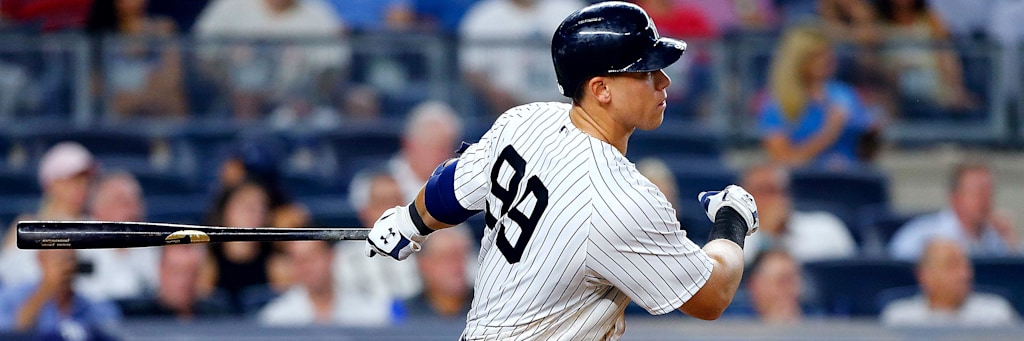
The answer is the part of the box score the starters do not control: the lineup behind them. The Yankees lead all of Major League Baseball with 109 home runs and score 5.28 runs per game, one of the most productive offenses in the sport. They do that damage at Yankee Stadium, a ballpark whose short right-field porch turns fly balls into home runs for a left-handed-heavy order. Aaron Judge sits at the center of it, already chasing what would be a fifth career 50-home-run season, a feat no hitter in history has reached. When the model lays the Yankees at home, it is not betting on Ryan Weathers throwing a gem. It is betting that the best run-scoring lineup in baseball, in its own launching pad, beats a White Sox club it should beat more often than not.
What A -161 Favorite Actually Costs You
Here is the core beginner lesson, and it is the most important math in this whole article. A minus price tells you how much you have to risk to win 1 unit. At -161, you risk 1.61 units to win 1 unit. So our 3-unit stake on the Yankees means you are putting 4.83 units at risk to win 3. If the Yankees win, you collect 3 units of profit. If they lose, you are down the full 4.83 units risked. That asymmetry, risking more than you stand to win, is the price of backing the better team, and it is the single concept that trips up the most newcomers.
| Detail | Value | What it means for a beginner |
|---|---|---|
| The bet | Yankees moneyline | Wins only if the Yankees win the game |
| The price | -161 | Risk 1.61 to win 1; a clear favorite |
| The stake | 3 units | Risk 4.83 units to win 3 units |
| Break-even win rate | About 62 percent | The Yankees must win this game 62% of the time to profit long term |
| The engine | MLB-best 109 HR, 5.28 runs per game | An elite lineup in a home-run park |
That break-even number is the most useful idea a beginner can carry away. To turn a profit over time laying -161, the Yankees do not just need to win this game. They need to win games like this one roughly 62 times out of 100. The model's job is to estimate the true win probability and compare it to that 62 percent threshold. When it grades a first-place team at home with the best offense in baseball above that line, the heavy juice is not a trap; it is simply the correct toll for a steady spot. Pay it knowingly, not blindly. We walked through the mirror image of this idea, a road favorite priced near a coin flip, in our Braves moneyline value guide.
Why The Model Sizes This At A Full 3 Units
If the price is steep, why does the model commit its biggest stake here? Because moneyline variance against a clearly weaker opponent is low, and the model concentrates money where the result is steadiest. The same principle drove our recent Yankees moneyline pick behind Gerrit Cole: when a strong team is at home with a real edge, the single-game outcome is more predictable than a swingy total. A team total can be wrecked by one quiet inning, and a game total can flip on a single home run. A moneyline only asks one question, who wins, and a first-place lineup in its own park answers that question more reliably than almost anything else on a slate. Steadiness is what justifies the size, and 3 units is the model's way of saying this is the most predictable result on the board.
The Lineup Edge Beats The Starter Question
Notice what the model is deliberately not leaning on: Ryan Weathers having a great night. His 4.36 ERA is fine, not dominant, and the bet does not require him to outduel Sean Burke. This is a crucial habit for new bettors to build. You do not need every input to favor your side. You need the decisive input to favor it. Here the decisive input is the offense, and the gap between a 5.28-run Yankees lineup and a White Sox staff arm is wide enough that even an average Weathers start should be enough. Learning to identify which single factor carries a bet, and ignoring the noise around it, is the difference between guessing and handicapping.
From One Game To A Season: The AL East Futures Angle
Here is where that day's pick becomes a lesson that pays off all year. A futures bet is a wager on a season-long outcome, like which team wins the AL East or how many games a club wins. The exact same reasoning that makes the Yankees a sound single-game lay is the reasoning that shapes a smart futures opinion. A team at 45-27 with the best offense in baseball and a deep roster is not just a good bet that night; it is a profile that tends to hold up over 162 games. The home-run power that wins you a single game in the Bronx is the same power that grinds out a division title over a summer.
The teaching point is about timing and price. The cheapest moment to back a contender in a futures market is before the public fully believes, and the most expensive is after a hot streak when everyone has piled in. A first-place Yankees club is already a heavily bet division favorite, which means the futures value on them has largely been squeezed out, the same way the -161 game price has the value squeezed thin. The flip side is the White Sox at 38-34, a surprise contender whose futures number may still carry value precisely because the market has not fully adjusted to a team outperforming expectations. Watching how a single game is priced trains your eye for how a whole season is priced. Bet the team when the market underrates it, fade the price when the market has caught up.
Verified Pick Inputs
| Game | Records | Starters |
|---|---|---|
| White Sox at Yankees (Yankee Stadium) | CWS 38-34 / NYY 45-27 | Sean Burke (3-4, 4.15 ERA, 73 K) / Ryan Weathers (2-5, 4.36 ERA, 81 K) |
One detail worth flagging for newer readers: the Yankees' modest pitching matchup is the reason this is a moneyline and not a run line. A run line asks a favorite to win by two or more, and laying -1.5 with an average starter against a competent White Sox club adds real risk. The model stays on the straight moneyline because it is confident the Yankees win, less confident they win by a comfortable margin. Choosing the right bet type for your level of confidence is itself a skill, and we broke down that exact moneyline-versus-run-line choice in our guide to moneylines, team totals and game totals.
The Honest Counterpoint
No favorite is a lock, and this one has a clear, nameable risk: the price gives you no cushion. At -161 there is no plus-money payout to soften a loss, so any night the Yankees offense goes quiet against Sean Burke, you lose 4.83 units to win 3, a steep ratio if it goes wrong. The White Sox are a real 38-34 team, not a pushover, and one Weathers clunker paired with a sleepy Bronx lineup flips this in a hurry. The model still takes it because the offensive edge is genuine, the park amplifies it, and a first-place club at home clears the 62 percent bar the price demands. Favored is not the same as certain, which is why even the card's biggest stake is a measured 3 units rather than a reckless max bet.
Final Verdict
The June 18 model anchor is the New York Yankees moneyline at -161 for 3 units against the White Sox at Yankee Stadium. Strip it down and it is simple: the best run-scoring lineup in baseball, led by Aaron Judge's MLB-leading home-run power, in its own home-run park, against a club it should beat. The heavy juice is the honest toll for a steady spot, the unit math shows exactly what that toll costs, and the same read that values the Yankees that night is the read that values them, and exposes the surprise White Sox, in the AL East futures market. For more beginner-friendly breakdowns and the full record of how these plays have landed, browse the daily picks archive and the latest AI cards.