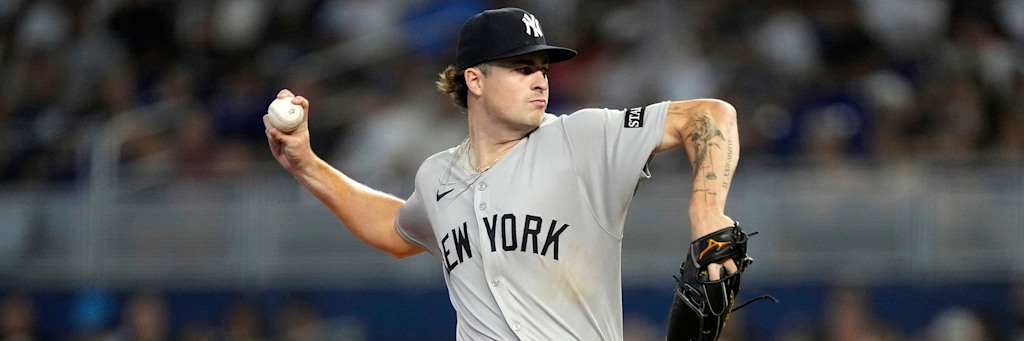
If you are newer to betting, the most useful thing an AI model does is tell you which number to trust. Records and reputations are loud, but the model quietly sorts every game by the inputs that actually move outcomes, and on this Saturday two of them stand out for very different reasons. The New York Yankees moneyline at -117 is a rookie-breakout pitching bet behind Cam Schlittler, and the Carolina Hurricanes at Vegas Golden Knights over 5.5 is a Stanley Cup Final Game 6 total with a championship on the line. This guide walks through what each pick is, why the AI leans the way it does, and the simple math that makes them beginner-friendly.
Start with the vocabulary, because it matters. A moneyline is the simplest bet there is: you pick who wins, nothing more. No run margin, no spread, just the winner. The price tells you the cost. At -117 the Yankees moneyline means you risk 117 to win 100, which translates to needing the Yankees to win roughly 54 percent of the time just to break even. That is barely above a coin flip, and that is the whole reason the model likes it.
Why The AI Backs The Yankees Moneyline: A Rookie Breakout
The headline input is Cam Schlittler, and his 2026 season is the kind of profile a model loves. Schlittler is 7-3 with a 1.87 ERA, a 0.87 WHIP and 89 strikeouts across 82 innings over 14 starts. For a newer bettor, here is how to read those numbers: a 1.87 ERA means he allows under two earned runs per nine innings, elite by any standard, and a 0.87 WHIP means he puts fewer than one baserunner on per inning. Fewer baserunners means fewer rallies, and that is how a rookie turns into a moneyline anchor. The Yankees are also 41-27, the best form in their division, so the model is not asking a bad team to win. It is asking a very good one with an ace-level rookie on the mound.
Toronto counters with Kevin Gausman, and Gausman is a real major-league starter, not a soft spot. He is 4-4 with a 3.60 ERA and a 1.09 WHIP. The point for a beginner is not that Gausman is bad, it is that the gap favors New York. A 1.87 ERA against a 3.60 ERA, and a 0.87 WHIP against a 1.09 WHIP, is the model reading roughly a run and a half of expected edge to the Yankees before the bats are weighted in. When the better arm fronts the better team and the price is only -117, the AI treats that as one of the cleaner value spots on the board.
Verified Card Setups
| Matchup | Key info | Records |
|---|---|---|
| Yankees at Blue Jays (Rogers Centre) | Cam Schlittler (1.87 ERA, 0.87 WHIP) vs Kevin Gausman (3.60 ERA, 1.09 WHIP) | Yankees 41-27 / Blue Jays 34-36 |
| Hurricanes at Golden Knights (Stanley Cup Final Game 6) | Carolina leads the series 3-2 and can clinch the Cup | Series: Hurricanes 3, Golden Knights 2 |
One baseball moneyline driven by a pitching edge, and one hockey total driven by stakes and series math. Different sports, same model logic: bet the number the data supports, not the name on the jersey.
The Stanley Cup Game 6 Over: Why The AI Leans To Goals
Now the hockey leg, and this is where a beginner learns what a total is. A total, or over/under, is a bet on the combined score of both teams rather than who wins. The line for Game 6 of the Stanley Cup Final between the Carolina Hurricanes and the Vegas Golden Knights is 5.5 goals, and the model leans over at -130 for 3 units, the largest position on the card. The over wins if the two teams combine for 6 or more goals.
Here is the read in plain terms. Carolina leads the series 3 games to 2, which means the Hurricanes can clinch the Stanley Cup with a win on the road. A team one win from a championship plays with desperation and pace, and the team facing elimination, Vegas, has no reason to sit back and protect anything, because a single loss ends their season. Two teams with everything to gain and a trailing side that must push for goals is exactly the script that inflates a total. The model weighs the series leverage heavily, and a 5.5 line in a win-or-go-home Game 6 with a Cup on the line projects above the number. Game 6 is scheduled for Sunday June 14 at 8 PM Eastern at T-Mobile Arena, so this is a play you can lock in early.
Why The Game 6 Over Carries The Most Units
For a newer bettor, unit sizing is just a way of saying how confident the model is. The Yankees moneyline carries 1.5 units and the Stanley Cup over carries 3, double the size, and the reason is the strength of the signal. A single baseball game is one start that can go sideways on one swing, so the model keeps the moneyline measured. The Game 6 over leans on a structural edge, the series leverage and elimination desperation, that shows up across many similar spots, so the AI sizes up. Bigger, more reliable signal equals more units. That is the entire framework.
The broader slate runs on the same pitching-edge idea that drives the Yankees pick. Elsewhere on the board the model leans on the Tigers First 5 behind Tarik Skubal's 2.70 ERA and the Dodgers behind Yamamoto's 0.92 WHIP, both spots where one dominant arm tilts the math. When you are learning, that repetition is the lesson: the model keeps betting the same principle because it keeps being right more often than not.
The Honest Counterpoint
No pick is a lock, and a good beginner habit is to know how each one loses. The Yankees moneyline dies if Schlittler has a rare rookie stumble or Gausman throws his best game, and because it is a moneyline, a 2-1 loss cashes nothing even if the Yankees play well. Baseball is high-variance over nine innings, which is exactly why the model keeps this leg at 1.5 units. The Game 6 over has its own trap: playoff hockey can turn into a tight, defensive 2-1 grind where both goalies stand on their heads, and an elimination game does not always open up the way the leverage suggests. A low-event game beats the over even with the stakes high.
That is why the model leans on inputs that repeat rather than vibes that do not. Schlittler's 1.87 ERA and 0.87 WHIP are stable season-long numbers, and the series-leverage edge in a Game 6 with a Cup on the line is a pattern that holds across samples even when a single game defies it.
How The Prices Set The Stakes
At -117 the Yankees need to win about 54 percent of the time to break even, and a Schlittler-over-Gausman matchup fronting a 41-27 club clears that low bar comfortably in the model's read. At -130 the Game 6 over needs about 57 percent, and a win-or-go-home Stanley Cup Final game with a Cup on the line and a trailing team forced to chase goals projects above that threshold. The stakes scale with how far each projection sits past the break-even number, which is the simplest possible way to think about value.
What Beats It
A rookie off night beats the Yankees moneyline, where one bad Schlittler inning or a sharp Gausman start can flip a coin-flip-priced game. The Game 6 over loses to a tight defensive grind, the classic playoff 2-1 where both goalies dominate and the elimination pressure tightens the game instead of opening it. Both plays lean on their main input holding, Schlittler's run prevention and the series leverage pushing pace, which the data favors but no single night guarantees.
Final Verdict
The beginner AI card for this Saturday is the New York Yankees moneyline at -117 for 1.5 units behind rookie Cam Schlittler's 1.87 ERA and 0.87 WHIP at Rogers Centre, paired with the Carolina Hurricanes at Vegas Golden Knights over 5.5 at -130 for 3 units in a Stanley Cup Final Game 6 with the Cup on the line. The lesson for new bettors is the model's whole method in two picks: back the number the data supports, size by how strong the signal is, and respect the variance on any single game. For more beginner-friendly model cards, see our walkthrough of how an AI sizes a full slate, our guide to road-favorite value, and the full model archive for how these AI cards have performed.