Baseball has not been played since July 12. The All-Star break took four days, and that night fifteen rosters walk back onto the field with nobody, human or machine, entirely sure what they will look like. That uncertainty is the most important thing on this page, and it is why that day's card has two plays on it instead of nine.
Here is the whole thing up front. Cleveland Guardians moneyline at -122 for 1 unit at Progressive Field, and the Dodgers-Yankees under 9 at +100 for 1.5 units in the Bronx. If you are newer to this, that day is a compact slate to learn from, because it contains the two most common bets in baseball, a moneyline and a game total, and a genuinely useful lesson about when to stop trusting a model.
Plus Money, Minus Money, And The Break-Even Number
Every price on a betting board answers one question: how often do you need to be right just to break even. Learn to convert odds into that percentage and most of the mystery in this hobby evaporates.
| Odds | The math | Break-even | Risk 1 unit to win |
|---|---|---|---|
| +100 (even money) | 100 / (100 + 100) | 50.0% | 1.00 unit |
| -122 | 122 / (122 + 100) | 55.0% | 0.82 units |
A minus sign means you risk more than you win. At -122 you put up 1.22 to collect 1.00, so you have to win 55 percent of the time to end up even. A plus sign means the opposite. At +100 you risk 1 to win 1, and a coin flip pays for itself.
That +100 on the under is unusual and it is worth pausing on. Totals in marquee games almost always cost extra on at least one side, because the market knows which way the public leans. that night the number 9 is being offered at even money, which means the house is charging nothing to take the quiet side. Cheap prices are the entire game.
The Lead Play: Guardians Moneyline -122 (1 Unit)
| Item | Guardians | Pirates |
|---|---|---|
| Record | 51-46, won 4 straight | 50-47, 7-3 last ten, won 3 straight |
| Runs per game | 3.97 scored, 3.99 allowed | 5.32 scored, 4.87 allowed |
| Bullpen | 3.71 team ERA, 32 saves | 4.32 team ERA, 1.32 WHIP, 19 saves |
| Starter | Gavin Williams: 10-4, 3.81 ERA, 134 K in 113.1 IP | Jared Jones: 1-1, 4.37 ERA, 39 K in 35.0 IP |
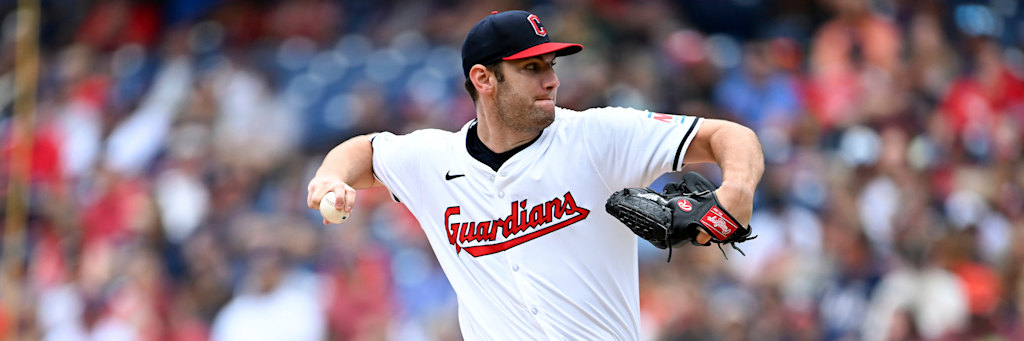
The bet here is one pitcher and one bullpen. Gavin Williams is 10-4 with a 3.81 ERA, a 1.15 WHIP, and 134 strikeouts in 113.1 innings, which works out to 10.64 per nine. He is also the only starter in either of that night's featured games carrying a normal season's workload, 19 starts deep. His last outing before the break was the best of his year: seven innings against Minnesota on July 9, 11 strikeouts, one walk, three hits.
Behind him sits a bullpen with 32 saves, more than the Dodgers, Yankees, or Pirates have managed, and Pittsburgh's relievers carry a 4.32 ERA and a 1.32 WHIP. Close games are usually decided by whoever pitches the seventh and eighth. Cleveland wins that comparison clearly, and at -122 you are paying a 55 percent toll for it.
The Bigger Stake: Dodgers-Yankees Under 9 (1.5 Units)
Two of the best run-prevention teams in baseball meet at Yankee Stadium that night. Los Angeles allows 3.68 runs per game. New York allows 3.86. Stack those and you get 7.54 runs of combined defensive baseline, a run and a half below the posted 9. Their bullpens read 3.55 and 3.39, both rested, and neither club has to hand late innings to somebody who does not belong there.
New York's offense is the other half. The Yankees hit .237 as a team with 867 strikeouts, the most of any club playing in these two games, and 142 home runs. A lineup that scores in bursts off the long ball goes quiet more often than a contact lineup with the same average output, and that tendency is at its strongest after four days off. Nobody's timing is sharp on the first night back.
Why The Cheaper Bet Gets The Bigger Stake
Newer bettors tend to size by confidence. The bigger stake goes on the play that feels most certain. That instinct is backwards, and that day is a clean illustration of why.
The under takes 1.5 units because it only has to clear 50 percent to break even. The Guardians take 1 unit because they have to clear 55. When two bets look similarly likely, the one that demands less of you is the better bet, and it deserves more money. Price first, feeling second.
Size matters in the other direction too. The Guardians play leans on one man. If Williams pitches well, Cleveland probably wins. If he has an ordinary night, this offense cannot rescue him, and that is a real problem, because Cleveland has scored 385 runs with a .229 team average and a .679 OPS. The club's run differential is minus two despite the 51-46 record, which is the statistical signature of a .500 team wearing a winning record. One unit is the correct exposure for a bet with a single engine.
The Model's Blind Spot that day
Now the part most pick pages leave out. The projection engine behind this card leans heavily on rolling 30-game offense data, a measure of how each lineup has been producing lately. Those rollups last updated on July 12, because that is the last day anyone played.
Five days later they still describe July 12. They have no idea that four days of rest happened. So the model's own output failed its internal quality check this morning and is not being presented to you as a validated edge, and the projection for the Bronx actually landed above the total, at a combined 9.27 runs, which disagrees with the under on this card.
Both plays here were built instead on the inputs a layoff cannot touch: 97 games of run prevention, season-long bullpen quality, and a starting pitcher's workload. That is the futures-minded habit worth taking from that day. Over a long season, the numbers that survive weird circumstances are the ones with the biggest samples behind them. Cleveland's 51-46 is a .526 pace, about 85 wins over 162. The Dodgers at 61-36 are on a .629 pace, roughly 102. Records built over 97 games mean something. A hot week means considerably less.
The Two Ways that night Goes Wrong
The Guardians play loses to Jared Jones, who threw six hitless innings against Atlanta on July 8 with eight strikeouts and no walks, and who now gets extra rest. His ERA reads 4.37 but his .220 opponent average and 10.03 strikeouts per nine say he is better than that, and Pittsburgh has won three straight while scoring 5.32 runs per game. Cleveland's .679 OPS is the worst bat in either game. The under loses to Roki Sasaki, who has allowed 19 home runs in 81 innings, carries a 5.33 ERA, and gave up three home runs in three innings against San Diego on July 2. Put that in Yankee Stadium against a team with 142 home runs and the under can be dead before the fifth. Lineups were not final at publication, and no model has a clean read on the first night back. Two plays, 2.5 units, sized accordingly.
Where The July 17 Card Lands
Small stakes are the message here, not an accident, a selectivity lesson the 2026 AI Showdown post-mortem taught this model the expensive way. The Cleveland Guardians moneyline at -122 for 1 unit buys the best strikeout arm on the board, 134 in 113.1 innings, plus the deepest bullpen in either game, and accepts that the offense behind him is the weakest. The Dodgers-Yankees under 9 at +100 for 1.5 units takes a 50 percent break-even on a game between clubs that allow 3.68 and 3.86 runs per game, with two rested bullpens and a .237 Yankee lineup shaking off four days of rust. The bigger stake sits on the cheaper price, which is the whole lesson. For more beginner walkthroughs, see the July 12 AI card, the unit sizing guide, the game total beginners guide, and the full picks archive.