The Run Line That Says Minus One, Not Minus 1.5
This was the board as of 2026-08-07. Any price quoted below is the price that was available at that time, not a current quote. Kept online with its original analysis intact; present-tense wording has been corrected so nothing here reads as live.
The Half Run That Is Missing
Scroll that day's card and one line looks broken. Every run line you have ever seen in baseball is 1.5 runs. that day's biggest play reads Milwaukee Brewers run line -1 at -198. Nobody dropped a digit. This is an alternate run line, and the half run that is missing changes what can happen to your ticket.
Beginner Note: A Bet With Three Outcomes
A standard run line of -1.5 has two outcomes. Milwaukee wins by two or more and you win, or anything else happens and you lose. A one-run win loses. At -1, there are three outcomes instead. Milwaukee wins by two or more and you win. Milwaukee wins by exactly one run and the bet is a push, meaning your stake is returned and nobody wins anything. Milwaukee loses the game and you lose. The one-run result stops being a loss and becomes a refund.
That refund is what you are paying for. A -1.5 run line on a strong favorite usually comes with a friendlier price, sometimes even plus money. This one costs -198 precisely because the worst realistic outcome for a favorite, the tight one-run win, no longer takes your money.
Why This Particular Team Is Worth Laying
Milwaukee is 73-44, the best record in all of Major League Baseball. At home the Brewers score 5.11 runs per game. That is the offensive half.
The pitching half is Jacob Misiorowski, and his season is unusual enough to state carefully. He leads the majors in earned run average at 1.63. He also leads the majors in WHIP at 0.73. He also leads the majors in strikeouts, with 195 across 127 innings. Leading one of those categories makes a pitcher a story. Leading all three at the same time is rare. Opposing hitters are batting .145 against him.
Minnesota counters with Connor Prielipp, who has a 4.75 ERA across fifteen starts and a 1.31 WHIP.
Beginner Note: Reading A Price Like -198
A price of -198 means you risk $198 to win $100. To break even over the long run, a bet at that price has to win 66.4 percent of the time. That is a high bar, and it is the honest cost of laying a strong favorite. The push rule above is what makes a bar that high reasonable rather than reckless, because one-run wins get refunded instead of counting as losses.
The Biggest Price On The Card Belongs To A Bullpen Game
Boston is -230 against the Athletics at Fenway Park, also staked at three units. The strange part is who is pitching. Erik Miller is the listed starter, and he has made forty appearances this season without starting a single one of them. He is what baseball calls an opener.
Beginner Note: What An Opener Is
An opener is a relief pitcher sent out to begin the game, usually for one or two innings, with the rest of the game covered by a parade of other relievers. Teams do it to get a favorable matchup against the top of the opposing order. When you bet a game with an opener, you are betting on a bullpen rather than on a starting pitcher.
There is a second wrinkle worth knowing. Miller was pitching for the San Francisco Giants nine days ago. His last Giants appearance came on August 2 and his Boston debut came on August 4. The 2.76 ERA that usually appears next to his name was earned in a San Francisco uniform across 32.2 innings. In Boston he has thrown 2.1 innings.
So why lay -230? The Athletics are 46-71 and have lost nine of their last ten. Away from home their offense falls apart, scoring 3.68 runs per game with a .643 OPS, compared to 5.00 runs per game in their own ballpark. Boston is 64-52 and has won nine of ten.
Two Moneylines And A Total, Briefly
The Dodgers are -139 in Arizona behind Justin Wrobleski, who is 11-3 with a 3.31 ERA. Los Angeles scores 5.59 runs per game on the road, the best travelling offense of the twelve teams playing on this card. Arizona's Eduardo Rodriguez is genuinely good at 2.71, which is why this is a moderate 1.5 units.
The Yankees are -137 at home against Atlanta. Cam Schlittler has a 2.26 ERA, third best in baseball, with 171 strikeouts against only 31 walks. Atlanta sends Grant Holmes at 3.67.
In St. Louis the card takes the over on a total of 9 runs at -120, and this one is about a single pitcher. Colorado's Michael Lorenzen has a 6.94 ERA, a 1.85 WHIP, and opposing hitters are batting .336 against him. Across his last three starts he allowed six earned runs in 3.2 innings, three in four innings, and seven in three innings.
Two Bets On One Game In San Francisco
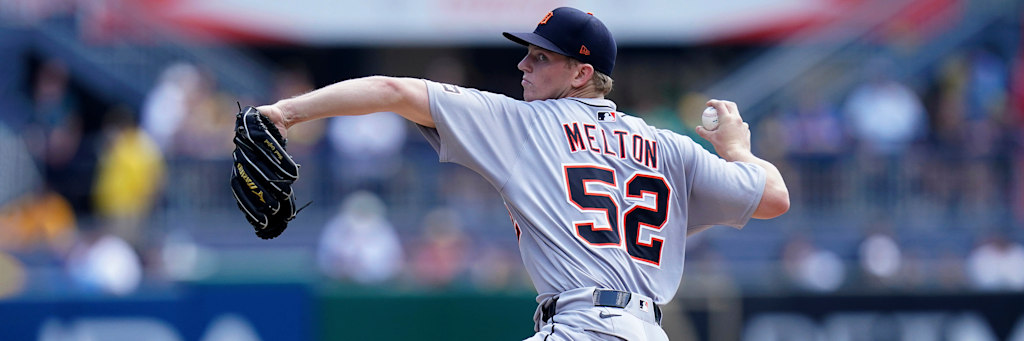
Detroit at San Francisco carries two separate plays, and they are not the same bet. The first is the game total under 7.5 at -120 for two units, covering both teams added together. The second is a Detroit team total under 3.5 at +105 for one unit, covering only what the Tigers score.
Beginner Note: Plus Money On A Favorite Idea
The Detroit team total is the only play on that day's card priced at plus money. A price of +105 means a $100 bet returns $105 in profit rather than costing more than it wins. It only needs to succeed 48.8 percent of the time to break even, the lowest bar of any ticket on the card, which is what makes a plus price valuable even on a modest opinion.
Troy Melton starts for Detroit at 1.58 with a 0.91 WHIP. San Francisco's Logan Webb counters at 3.74 with a 1.11 WHIP, and he has allowed only nine home runs across 125 innings. The Giants score 4.09 runs per game at home.
| Play | Price | Units | Break-Even |
|---|---|---|---|
| Brewers Run Line -1 | -198 | 3.0 | 66.4% |
| Red Sox Moneyline | -230 | 3.0 | 69.7% |
| Tigers/Giants Under 7.5 | -120 | 2.0 | 54.5% |
| Dodgers Moneyline | -139 | 1.5 | 58.2% |
| Yankees Moneyline | -137 | 1.5 | 57.8% |
| Tigers Team Total Under 3.5 | +105 | 1.0 | 48.8% |
| Rockies/Cardinals Over 9 | -120 | 1.0 | 54.5% |
Card Summary
Being Honest About The Risks
The Boston ticket is the one to worry about. Paying -230 means needing to be right roughly seven times out of ten, and the pitching matchup does not support it. The Athletics start J.T. Ginn, who is 8-6 with a 3.51 ERA and holds hitters to a .212 average, a better established arm than the bullpen Boston is running out.
The St. Louis over has a problem too, and it is fair to name it. Neither offense in that game scores much in that ballpark. Colorado away from Coors Field averages 4.45 runs per game, and St. Louis at home averages just 3.68. Added together that is closer to eight runs than to ten. Our own team-total model projects St. Louis at 3.92 runs and actually leans to the St. Louis under, which is a direct disagreement with taking this over. The ticket only works if Lorenzen pitches the way his last three starts suggest.
And the Yankees price hides something. Schlittler's excellent 2.26 ERA is almost entirely a road number. At Yankee Stadium, where he pitches that day, it is 4.32.
What that day Says About The Futures Board
Six games in August tell you a lot about October. Milwaukee at 73-44 owns the best record in baseball and leads the Chicago Cubs by 5.5 games in the National League Central. The Dodgers at 70-47 lead the West by 8.5 over the very Arizona club they play that day. Atlanta at 70-47 leads the East by the same 8.5 games, and the Braves spend this afternoon in the Bronx against a Yankees team sitting 4.5 behind Tampa Bay.
The other side of the card is the opposite story. Colorado at 46-71, the Athletics at 46-71, and San Francisco at 49-68 are all playing out the season. Detroit at 57-60 is the interesting middle case, still only 3.5 games out in a weak American League Central. We track how these races move on the futures tracker.
Sources And Editorial Review
Teams, venues, first pitch times and probable pitchers for this card were checked against the official MLB schedule, and every record, ERA, WHIP and split figure was pulled from live league statistics during this session. Each pitcher's numbers were checked against his individual team splits, which is how the San Francisco portion of Erik Miller's season was separated from his Boston appearances. Odds are pregame snapshots and can move after publication.
This article is AI-assisted: automation helped assemble the statistical comparison, calculate break-even percentages and draft the matchup breakdown, and the Daily MLB Picks editorial desk completed a review of the markets, math, matchup names, source links and risk language before publication. Read the full editorial, sourcing, grading and corrections policy.