This was the board as of 2026-08-05. Any price quoted below is the price that was available at that time, not a current quote. Kept online with its original analysis intact; present-tense wording has been corrected so nothing here reads as live.
Why that night's Card Has Four Plays And No Favorite Team In Common
Four Bets, Zero Overlap, One Repeating Idea
Most nightly cards share a theme because the games share circumstances, like every road favorite on a getaway day or every under in a cold weather week. that night is different. The four plays cover three entirely separate games with no common opponent and no common ballpark, and yet the same mechanic drives every single one: a strikeout removes a baserunner from the equation without giving the defense a chance to make an error, and three of that night's four starting pitchers are missing bats at a rate that matters more than their win-loss record.
This is a beginner's walkthrough of why that matters, what an alternate line actually is, why two of that night's bets are connected to each other in a way that changes how they should be sized, and the honest state of what the site's own automated model thinks about all of it.
Beginner Note: What Is An Alternate Line?
Every game total or team total has a main line set by the sportsbook, and most books also offer alternate versions of that same number at different prices. A team total under 2.5 might cost -180 while the same team's total under 3.5 costs -150. You are buying more room for the team to score before your bet loses, and you pay for that room with a shorter, less profitable price. that night's first play uses exactly this tool.
Play One: Washington's Team Total, Bought At The Higher Number
Washington is averaging 5.3 runs a game this season across 116 games, hitting .250 as a team with a .766 OPS. James Wood is at .271 with a .396 on-base percentage, a .557 slugging mark, 30 home runs and 96 runs scored, an All-Star caliber year. CJ Abrams is hitting .290 with 122 hits and 88 runs batted in. On paper, betting against this offense scoring four runs looks aggressive.
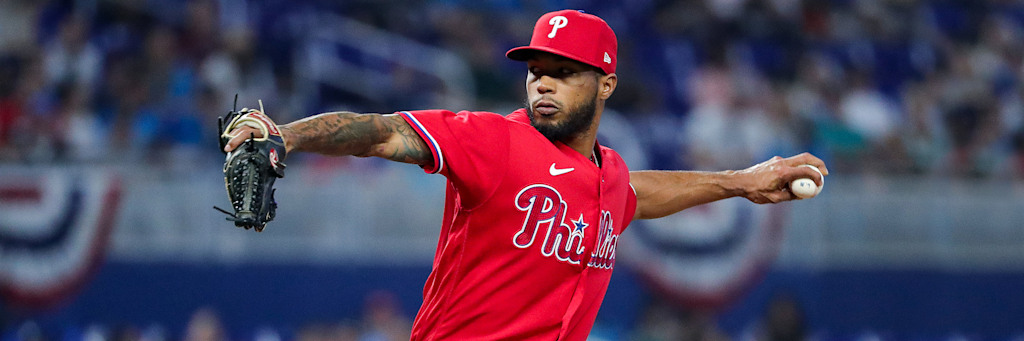
The reason it is not aggressive that night is the pitcher standing across from them. Philadelphia starts Cristopher Sanchez, who is 14-4 with a 2.61 earned run average across 144.2 innings, 168 strikeouts, and a strikeout rate of 10.5 per nine innings, one of the higher marks among National League starters. His WHIP sits at 1.20. This card takes the Nationals team total on the alternate 3.5 line at -150 rather than the sportsbook's default 2.5 line, buying an extra half run of cushion because a full run of separation between an ace-level performance and a market's blended average number is worth paying for.
Beginner Note: Why Strikeout Rate Matters More Than ERA Alone
Earned run average tells you what already happened. Strikeout rate tells you something about what is likely to keep happening, because a strikeout cannot turn into an error, a bloop single, or a defensive miscue. A pitcher who strikes out 10 men in a game has removed 10 opportunities for the defense to make a mistake behind him. That is why two pitchers with the same ERA can be very different bets depending on how many of their outs come from strikeouts versus balls in play.
Plays Two And Three: The Same Idea, Twice, In Seattle
The second and third plays both come from the Detroit-Seattle game at T-Mobile Park, and they are connected. Bryce Miller takes the mound for Seattle carrying a 2.80 ERA, the best mark of any starter appearing across that night's entire three-game featured slate. He pitches in front of a Seattle staff that owns a 3.71 team ERA, a 1.18 WHIP and allows just 3.82 runs a game, the strongest pitching group in either dugout that night. Detroit is averaging 4.5 runs a game on a .242 team average and a .729 OPS, a below-average offense walking into a tough building.
Beginner Note: What Does It Mean For Two Bets To Be Correlated?
Two bets are correlated when the same event that wins one also helps win the other, or the same event that loses one also tends to lose the other. Detroit team total under 3.5 and the Tigers-Mariners game total under 7 both lose if Detroit has one big inning. They are not two independent chances to win, they are closer to one idea expressed twice. That is exactly why each of these two plays is sized at just 1 unit rather than combined into a single bigger bet: the card is not doubling its exposure to the same outcome.
Framber Valdez starts for Detroit at 6-7 with a 4.41 ERA, an ordinary number that would not carry a play by itself. The reason the full game total is in play is T-Mobile Park itself, with dimensions of 331 feet down the left field line, 401 to dead center, and 326 down the right field line, plus the marine layer that regularly settles over Pacific Northwest ballparks in the evening and knocks down fly balls that would otherwise clear the fence in a warmer, drier building. Seattle's own offense, at 4.04 runs a game and a .689 OPS, is not going to bail out a total that both pitching staffs are working to keep down.
Play Four: The Widest Pitching Gap On The Board
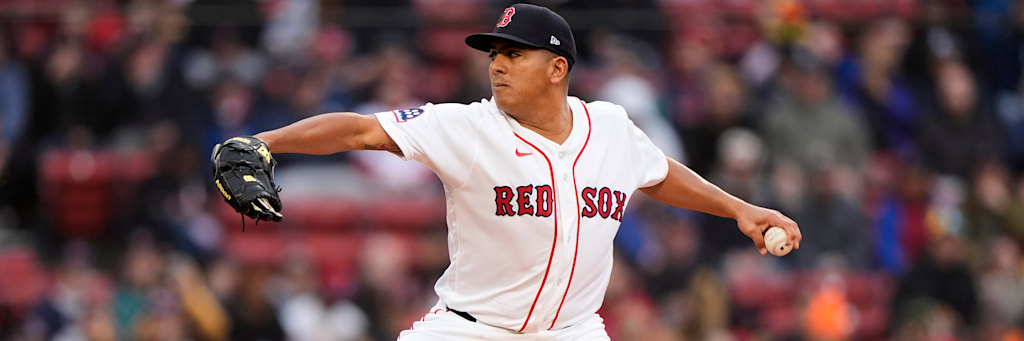
Boston lays -180 at home against a Chicago club starting Luis Castillo, and the pitching matchup explains almost the entire price. Boston's starter, Ranger Suarez, is 4-3 with a 3.15 ERA, 105 strikeouts and a 1.16 WHIP. Castillo is 3-9 this season with a 5.06 ERA and a 1.39 WHIP across 99.2 innings, a real decline from the pitcher he has been at his best, but every one of his 20 starts this year came with Seattle. that night is literally his first start for the White Sox. A 1.91 earned run average gap between two starting pitchers is the widest on that night's entire card.
Beginner Note: Reading A Moneyline Price
A price of -180 means you need to risk $180 to win $100, and it translates to needing to win 64.3 percent of the time to break even long term. That is a real bar to clear, and it is exactly why the honest counterpoint below matters as much as the case for the play itself.
What The AI Model Actually Says About that night
Transparency about the model is part of what this site promises, and that night is a good test of that promise. The daily projection engine's team-level run estimates for that night's six teams are Washington 4.46, Philadelphia 5.02, Detroit 4.67, Seattle 3.65, Boston 4.49 and Chicago 5.09. Across the entire eleven-game schedule that night, the model's only actionable signal is a small Phillies team total under play, and that pick is not one of the four on this card.
In plain terms: the automated model is not endorsing any of that night's four plays. This card was built by hand from real, verified matchup facts, a pitcher's strikeout rate, a ballpark's dimensions, an earned run average gap, rather than generated by the site's projection system. That distinction is the single most important thing a new bettor should understand about how this card came together, and it is stated here rather than buried.
The Honest Part
James Wood does not need a rally to beat a team total, he needs one swing, and a 30 home run season means that swing is always available. Framber Valdez's 4.41 ERA has produced worse nights than the number implies, and Detroit's offense has scored past comparable pitchers before, which would cost both Tigers-Mariners tickets at the same time since they share the same failure point. And Castillo's 3-9 record and 5.06 ERA across 99.2 innings this season were built entirely with Seattle; that night is his first appearance in a White Sox uniform, and a pitcher's debut with a new club can look nothing like his season line either way. None of these plays are sure things, and 64.3 percent, the number Boston needs to clear at -180, still leaves real room to be wrong more than one time in three.
| Play | Price | Units | Break-Even |
|---|---|---|---|
| Nationals Team Total Under 3.5 | -150 | 2.0 | 60.0% |
| Tigers/Mariners Under 7 | +100 | 1.0 | 50.0% |
| Tigers Team Total Under 3.5 | -110 | 1.0 | 52.4% |
| Red Sox Moneyline | -180 | 1.5 | 64.3% |
Card Summary
What This Means For The Futures Board
None of that night's three clubs on the winning end of these plays are chasing October at the time in the way a contender would be. Washington sits 56-60, Detroit 55-59, and Boston 62-51 is the lone club still playing meaningful games, 62-51 with real postseason positioning at stake against a Chicago team at 59-54 that has been competitive most of the summer. When a non-contending club like Washington or Detroit is on the wrong side of a total late in a season with nothing left to play for, that is a data point worth remembering the next time either offense shows up on a card, and we track exactly that kind of situational context on our futures tracker.
Sources And Editorial Review
Teams, game identity, venue and probable pitchers for this card were checked against the official MLB schedule, with records and pitcher statistics cross-checked on the ESPN MLB scoreboard. Odds are the pregame snapshots shown on the card and can move after publication.
This article is AI-assisted: automation helped assemble the statistical comparison, calculate break-even percentages and draft the matchup breakdown, and the Daily MLB Picks editorial desk completed a review of the markets, math, matchup names, source links and risk language before publication. Read the full editorial, sourcing, grading and corrections policy.